
Key factors for achieving success in agile product development

Table of contents
- Effective Communication and Collaboration
- Empowered and Autonomous Teams
- Continuous Feedback and Iteration
- Embracing Change and Flexibility
- Investing in Training and Skills Development
- Leveraging Appropriate Agile Frameworks
- Maintaining Psychological Safety
- Conclusion
Agile product development emphasizes adaptability, collaboration, and continuous delivery in environments where requirements evolve rapidly. Success depends on aligning cross-functional teams around a shared vision, prioritizing customer value, and maintaining short feedback loops that inform decisions.
Clear product ownership, transparent backlogs, and disciplined sprint planning help teams balance speed with quality. Equally important is a culture that supports experimentation, learning from failure, and incremental improvement, allowing teams to respond effectively to uncertainty without losing focus on outcomes.
Effective communication and technical excellence further shape results as products scale. Practices such as automated testing, continuous integration, and thoughtful architecture reduce risk and sustain momentum. Team composition and collaboration models also matter; for some organizations, nearshore software development can complement agile workflows by supporting overlapping work hours and frequent interaction. Regardless of structure, measuring progress through outcomes rather than outputs, and regularly inspecting and adapting processes, remain central to delivering reliable, user-centered products over time.
Effective communication and collaboration
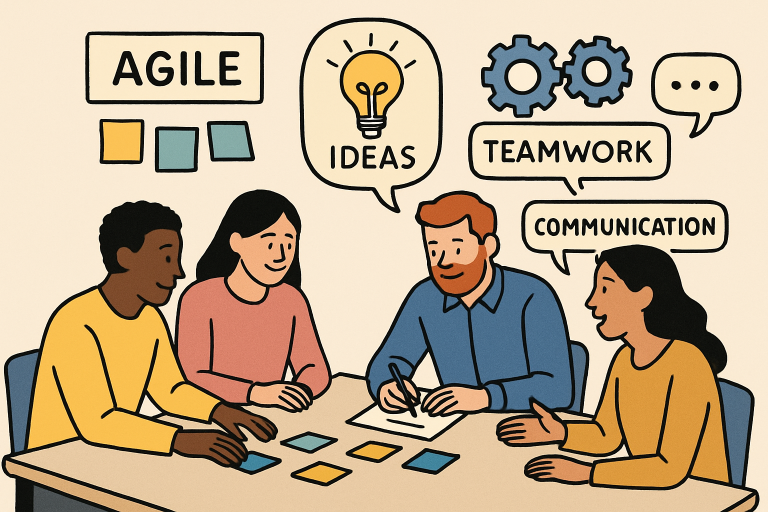
Clear, honest, and frequent communication is indispensable for any Agile team. It ensures that both the development team and stakeholders are aligned on product goals and evolving requirements. According to the Project Management Institute, nearly 80% of project failures stem from poor communication.
Facilitating open channels for dialogue, not just through daily standups, but also dedicated feedback sessions, can dramatically reduce misunderstandings, align teams, and keep projects on track. Incorporating project management tools such as Jira or Slack can enhance transparency and foster ongoing exchange of ideas, ensuring issues are flagged and addressed swiftly.
Empowered and autonomous teams
Modern agile organizations empower their teams to make decisions at every stage of the development lifecycle. By encouraging autonomy, product squads gain a profound sense of ownership. Spotify’s deployment of small, cross-functional squads exemplifies the benefits, as end-to-end responsibility leads to rapid iteration, experimentation, and a sharper focus on delivering value.
This structure dramatically shortens feedback loops, accelerates timelines, and increases team satisfaction. Empowered teams become less reliant on top-down directives and are more capable of adapting to obstacles and customer insights on the fly.
Continuous feedback and iteration
Agile’s foundation is iterative delivery, developing products in manageable increments called sprints. Each sprint ends with a review or retrospective, creating built-in opportunities for feedback, learning, and course correction. This iterative process not only decreases time-to-market by up to 30% but also integrates customer and stakeholder feedback more fluidly. For example, regular bi-weekly reviews give users a voice and increase overall satisfaction. This reduces the risk of late-stage surprises, allowing teams to remain proactive instead of reactive.
Embracing change and flexibility
Agile frameworks are designed for teams and organizations that thrive on change. Frequent releases and frequent stakeholder check-ins enable teams to make ongoing adjustments that reflect new business priorities or market movements. Research shows that companies engaging stakeholders throughout the process see a marked increase in satisfaction and product relevance. Adaptability not only makes products more competitive but also builds long-term resilience by promoting a growth mindset within teams.
Investing in training and skills development
Despite Agile’s promise, one of the most cited pitfalls is inadequate training. To truly embed Agile principles, organizations must invest in comprehensive upskilling, from technical know-how to the softer skills essential for effective collaboration. A survey highlights that insufficient training is a chief cause of Agile implementation failures. Ongoing education in areas such as scrum ceremonies, DevOps, and Lean product management ensures that teams remain competent and confident as they tackle new challenges. Allocation of budgets for workshops and certifications can yield immense long-term returns.
Leveraging appropriate agile frameworks
Selecting and customizing the right Agile framework is another critical success factor. Agile offers multiple frameworks, Scrum, Kanban, Lean, and more, each with unique benefits and trade-offs. For example, Scrum’s defined roles, backlogs, and sprints provide clarity and predictability, particularly in larger teams or projects with evolving scope.
Meanwhile, Kanban’s visual boards enable smoother management of continuous work in progress. Evaluating organizational goals, team maturity, and the complexity of deliverables will help organizations align with the framework that best fits, maximizing productivity and satisfaction.
Maintaining psychological safety
Research from Google’s Project Aristotle and other leading studies proves that teams with high psychological safety, where members feel safe to take risks and share ideas, consistently outperform their peers. Psychological safety fosters open discussion, creativity, and fast problem-solving, all essential for innovation in Agile product development.
Leaders can cultivate this by encouraging respectful debate, recognizing contributions, and promoting diversity of thought. Teams that know their voices are valued are more willing to push boundaries and learn from failure, driving breakthrough results.
Steadily achieve and exceed your goals
Success in Agile product development requires far more than adopting tools or holding daily standups. It’s a holistic endeavor built on empowering people, cultivating trust, learning continuously, and embracing dynamic change.
Organizations that invest in effective communication, team autonomy, continuous feedback, comprehensive training, the right frameworks, and psychological safety are better positioned to deliver products that delight customers and keep pace with market demands. By embodying these critical factors, teams can not only navigate the complexities of modern development but also steadily achieve and exceed their goals.


