
Innovative approaches to affordable housing

Table of contents
- Introduction
- 3D Printed and Factory-Built Homes
- Solar-Powered Affordable Housing
- Office-to-Residential Conversions
- Accessory Dwelling Units (ADUs)
- Mixed-Income Developments
- Social Housing Initiatives
- Technology-Driven Housing Solutions
- Inclusionary Zoning Policies
As housing costs climb across the nation, the need for creative and sustainable answers has never been more critical. Addressing affordability means assessing not only how homes are built, but also who they’re built for, how they’re financed, and how they operate within communities. Leaders and visionaries in the field—such as John Picerne—are inspiring new models that promise to reshape the housing landscape for generations to come.
Innovative affordable housing solutions prioritize enhancing residents’ quality of life while addressing construction costs and supply levels. These strategies incorporate technology, regulatory reforms, and partnerships to increase housing accessibility for low- and middle-income households. Effective initiatives involve collaboration among government, technology, and market dynamics to tackle equity and sustainability challenges. Emerging trends showcase efforts to transform housing into a fundamental right, fostering inclusivity and accessibility across diverse communities in the United States.
3D printed and factory-built homes
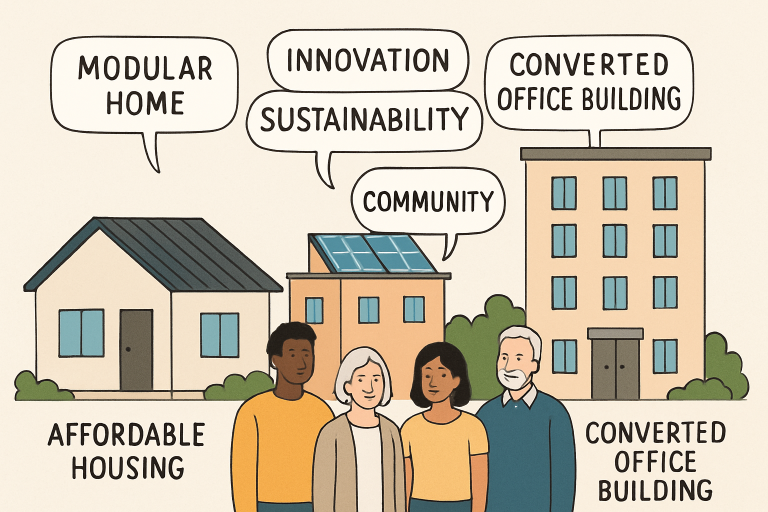
Builders are increasingly turning to advanced construction techniques to meet the surging demand for affordable homes. In Colorado, companies employ modular construction where homes are built up to 90% completion on assembly lines before being transported and finalized on-site in a matter of weeks. The adoption of 3D printing in homebuilding is also rapidly gaining traction.
This technique slashes labor costs, compresses timelines, and supports more precise fabrication. Despite the promise, these models face challenges, including upfront investment and outdated building codes, that hinder their widespread adoption. Experts note that standardized regulations and increased investment can accelerate these innovations, leading to faster and more affordable housing solutions nationwide.
Solar-powered affordable housing
Energy efficiency is integral to modern affordable housing. In Cleveland, the Lutheran Metropolitan Ministry has launched a project to build fully electric, solar-powered micro-units, aiming to lower utility costs for low-income residents.
Each compact unit is designed for optimal energy use and will be equipped with solar panels that not only reduce monthly expenses but also decrease the community’s environmental footprint. This project is part of a growing movement in which renewable energy upgrades are incorporated into housing design from the outset, demonstrating that sustainability and affordability can go hand in hand.
Office-to-residential conversions
Many urban centers have witnessed a rise in vacant office space following sweeping changes to work habits during the pandemic. Progressive cities like Phoenix are converting unused office buildings into micro-apartments and single-room occupancy (SRO) units, thereby rapidly increasing the affordable housing supply in downtown corridors.
These conversions not only revitalize underutilized assets but also provide a practical and relatively quick solution to the affordable housing shortfall. Government subsidies often play a crucial role in making these projects economically viable, highlighting the importance of public-private collaboration.
Accessory Dwelling Units (ADUs)
Cities like Charlotte are empowering homeowners to be part of the affordable housing solution through policy and financial support for Accessory Dwelling Units. These independent units, often built in backyards or converted basements, provide additional rental options without requiring large land parcels or new infrastructure. By offering forgivable loans to encourage ADU construction, municipalities can weave affordable housing into the very fabric of established neighborhoods. ADUs are particularly effective in promoting intergenerational living, supporting seniors, or accommodating smaller households who may otherwise struggle with rising rents.
Mixed-income developments
The movement toward mixed-income housing developments is reshaping the conversation around affordable living. By integrating affordable, market-rate, and workforce housing within the same communities—as done in Charlotte’s Carya Pond project—cities are fostering diversity and social cohesion. These communities challenge traditional models, reduce poverty concentrations, and offer residents of all income levels access to the same amenities and opportunities for upward mobility.
Social housing initiatives
States like California are experimenting with bold legislative measures to expand social housing, drawing inspiration from successful European examples. The California Social Housing Act aims to establish an independent authority responsible for acquiring, developing, and operating non-market housing.
Social housing can offer stable, long-term affordability for a wide range of income levels, but progress depends on securing sustainable funding and broad political will. As social housing gains attention in the U.S., it is seen as a valuable complement to market-driven solutions and as a bulwark against displacement and housing insecurity.
Technology-driven housing solutions
Technology is increasingly being used to bridge gaps in information and access. Miami-Dade County’s Public Innovation Challenge invites tech startups to create digital platforms that enable residents to explore affordable housing opportunities, check their eligibility, and access support in real-time.
Such initiatives are designed to simplify housing navigation, improve data transparency, and streamline application processes—empowering more residents to find stable housing quickly and easily. These examples illustrate how data-driven solutions can improve public sector effectiveness and enhance the resident experience.
Inclusionary Zoning Policies
Inclusionary zoning is a planning tool that ensures a portion of new housing developments is reserved for low- to moderate-income families, often without heavy reliance on taxpayer subsidies. These policies counteract exclusionary zoning and promote economic diversity within neighborhoods.
By incorporating affordability requirements into the land use code, municipalities can steadily expand their affordable housing inventory and integrate residents from diverse income levels into thriving communities. For more on the latest zoning policy innovations, see this overview from Brookings Institution.
From advanced building techniques and renewable energy integration to regulatory reforms and digital innovation, the movement toward affordable housing is multidimensional. While there remains no single solution, the collective momentum of these initiatives signals meaningful progress toward making safe, decent homes accessible to all.


