How scheduling platforms can significantly reduce recruiter workload

Key takeaways
- Manual interview scheduling is a significant drain on recruiter time and resources.
- Scheduling platforms automate and streamline coordination, reducing administrative burdens.
- Key features to look for include calendar integration, candidate self-scheduling, and automated reminders.
- Adopting these tools can lead to substantial efficiency gains and improved candidate experiences.
Table of contents
- The Challenge of Manual Scheduling
- Impact of Inefficient Scheduling on Recruiters
- How Scheduling Platforms Streamline the Process
- Key Features of Effective Scheduling Tools
- Real-World Benefits of Adopting Scheduling Platforms
- Choosing the Right Scheduling Platform
- Conclusion
- Frequently Asked Questions
Recruiters often find themselves overwhelmed by administrative tasks, with interview scheduling being a primary culprit. Implementing advanced scheduling platforms can alleviate this burden, allowing recruiters to focus on strategic aspects of talent acquisition.
The challenge of manual scheduling
Coordinating interviews manually is a labor-intensive, error-prone process that involves identifying time slots, communicating with candidates and interviewers, and managing rescheduling. The complexity escalates with multiple stakeholders, such as department heads and hiring managers, leading to miscommunication and overlooked availability, which can delay hiring and generate frustration.
As organizations expand or engage in high-volume hiring, issues such as differing time zones, interview loops, and the need for panel interviews magnify these challenges, underscoring the value of scheduling platforms that reduce recruiter workload and streamline interview coordination.
Impact of inefficient scheduling on recruiters
Recruiters spend a significant amount of time, up to 86%, on administrative tasks, primarily repetitive activities such as scheduling interviews. This workload contributes to burnout and reduced efficiency. The introduction of AI in recruitment has further exacerbated the situation by increasing candidate applications, which have doubled recruiters’ workloads according to Greenhouse, a well-known hiring platform.
This surge in applications necessitates more efficient scheduling solutions to handle the higher volume. Additionally, manual scheduling negatively impacts candidate experience; in a competitive talent market, candidates expect timely communication. Inefficient scheduling practices can tarnish a candidate’s perception of the recruitment process, requiring recruiters to put in greater effort to engage candidates or potentially restarting the sourcing process if top candidates lose interest.
How scheduling platforms streamline the process
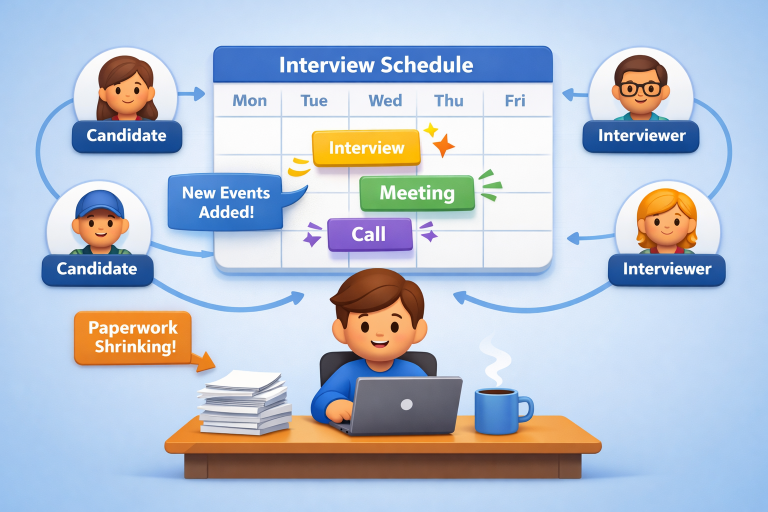
Advanced scheduling platforms automate the coordination of interviews by integrating with calendars, allowing candidates to select available slots, and sending automated reminders. This automation reduces the back-and-forth communication and minimizes scheduling conflicts.
For instance, Greenhouse offers automated scheduling features that identify optimal interview times based on candidate and interviewer availability, streamlining the process and reducing manual coordination.
Automated rescheduling is another standout feature of modern platforms. If a candidate or interviewer needs to change their time, they can do so with a few clicks, instantly updating all stakeholders. This not only enhances efficiency but also demonstrates organizational flexibility and respect for everyone’s time. Additionally, platforms can support group or panel interviews, manage time zone differences, and even automatically allocate the right interviewers based on skill set and availability.
Key features of effective scheduling tools
When selecting a scheduling platform, consider several key features. Calendar integration is essential, enabling synchronization with existing calendars to display real-time availability. Candidate self-scheduling empowers candidates to select interview times that suit their needs, while automated reminders help to reduce no-shows by sending notifications. Customization options allow organizations to tailor scheduling workflows according to their specific needs.
Additionally, analytics dashboards can help recruiters identify bottlenecks in the scheduling process by providing comprehensive reporting on key metrics such as “time-to-schedule,” “cancellation rates,” and “candidate no-shows,” fostering continuous improvement. Integration with video conferencing tools such as Zoom or Microsoft Teams enables the seamless creation of virtual interview links, minimizing manual coordination. Furthermore, multi-language and accessibility features are vital for ensuring inclusivity for candidates from diverse backgrounds.
Real-world benefits of adopting scheduling platforms
Organizations utilizing scheduling platforms report notable improvements in recruitment efficiency. Automated scheduling tools enable recruiting coordinators to manage an average of 158 interviews per week, compared to about 30 with manual processes. This boost in efficiency leads to faster hiring and a better candidate experience. Additionally, scheduling automation reduces time-to-hire, enabling recruiters to engage meaningfully with hiring managers and candidates and resulting in higher-quality hires. As administrative overhead decreases, employee satisfaction rises, empowering recruiters to focus on strategic tasks such as employer branding and passive candidate engagement. Consequently, organizations experience increased agility, scalability, and a demonstrable return on investment in talent technology.
Choosing the right scheduling platform
When selecting a scheduling platform, assess your organization’s specific needs, the volume of interviews conducted, and integration capabilities with existing systems. Platforms like Greenhouse are designed for complex, high-volume scheduling, offering features such as intelligent interviewer matching and deep ATS integrations.
Consider pilot programs or free trials to test platforms with your workflows and gather feedback from the recruitment team and candidates. Look for vendors that provide strong customer support, regular updates, and robust data security measures. Scalability is critical; ensure the platform can grow with your organization, accommodating surges in hiring volume or expansion into new regions. Reading user reviews and case studies can provide additional insight into long-term benefits and common pitfalls to avoid.
For forward-thinking talent teams
Implementing a robust scheduling platform is a strategic move to reduce recruiter workload, enhance efficiency, and improve the overall hiring process. By automating time-consuming tasks, recruiters can focus on engaging with candidates and making informed hiring decisions.
In the long run, scheduling platforms offer more than just administrative relief; they drive consistent candidate experiences, shorten hiring cycles, and allow recruitment professionals to be true partners in organizational growth. As technology continues to evolve, embracing automation in scheduling will remain a key differentiator for forward-thinking talent teams.
Frequently asked questions
How do scheduling platforms integrate with existing recruitment systems?
Most scheduling platforms offer integrations with popular Applicant Tracking Systems (ATS) and calendars, ensuring seamless data flow and minimizing the need for manual data entry.
Can scheduling platforms handle different types of interviews?
Yes, advanced scheduling tools can manage various interview formats, including phone screens, video interviews, and in-person meetings, accommodating different stages of the hiring process.
Are scheduling platforms suitable for small recruitment teams?
Absolutely. Scheduling platforms are scalable and can be tailored to meet the needs of both small teams and large organizations, providing benefits regardless of team size.
Will adopting a scheduling platform require training?
Most modern scheduling platforms feature intuitive user interfaces designed for rapid onboarding. However, organizations benefit from brief training sessions or walkthroughs to fully leverage advanced features and integrations. Most vendors offer documentation, tutorials, and support teams to ensure a smooth transition.
How do scheduling platforms ensure data privacy and security?
Leading scheduling tools comply with privacy regulations such as GDPR and use encryption to protect sensitive data. It’s important to verify a platform’s certifications and data-access policies to safeguard candidate and employee information.