Why lawn care expertise saves your grass from common pests
You draw the curtains on a crisp October morning and find a gang of crows and magpies tearing up your lawn. They’re flicking clumps of turf aside with the confidence of builders on a day rate.
Your first instinct is to bang on the window. Your second is to wonder whether you could put them on the payroll as pest control, given how committed they are to the job.
But those birds aren’t digging for fun; they’re feasting on grubs living beneath your grass, and the damage you can see is only half the story.
So, let’s look at how a professional tracks down these pests, deals with them properly, and keeps them from moving back in next year.
They Check How Healthy Your Lawn Is First
Before a professional goes looking for pests, they’ll take a close look at the grass itself. A thick, healthy lawn can lose a few roots to grubs without showing a single brown patch, but thin, compacted, or thatch-heavy grass is a different story.
Its roots stay shallow, so even a modest number of larvae can chew through enough of them to leave the turf yellow and loose.
British weather plays its part, too. Crane flies prefer to lay their eggs in damp lawns in late summer and early autumn, and with the usual September drizzle, they’re spoilt for choice.
Chafer beetles favour lighter, sandy soils that warm up quickly and let their grubs burrow with ease.
The patch near the washing line, or the spot where the paddling pool sat for most of July, is usually the first place trouble shows up.
Spotting these weak areas early tells a professional how much damage your lawn can tolerate and where pests are most likely to strike first. Knowing how strong the grass is tells them how much damage it can tolerate and how urgently it needs help.
They Know Which Pests Could Damage Your Lawn
Once the weak spots are clear, a professional will work out which pests are behind the damage.
A trained eye can usually identify the four most common culprits in British gardens from the damage alone.
Leatherjackets
Leatherjackets are the larvae of the crane fly, the gangly insect that bumbles around your lampshades every September. The adults are harmless, though their offspring are another matter entirely.
These grey-brown grubs feed on grass roots and stem bases through autumn and winter. You’ll often spot the yellowing patches in spring, just as you were hoping to enjoy time in your garden again.
Chafer Grubs
Chafer grubs are plump, creamy-coloured larvae that curl into a C shape and have distinctive brown heads. They feed on roots so thoroughly that affected turf can be rolled back like a loose rug.
But the grubs themselves are only part of the problem. Badgers, foxes, and birds will dig up entire sections of lawn to reach them. That often causes far more visible damage than the larvae ever do.
Ants
Yellow meadow ants build small, crumbly mounds that smother the grass underneath. They don’t harm the roots directly, but their hills leave the ground bare and uneven.
They’re also guaranteed to blunt your mower blades, usually on the one sunny Saturday you finally find time to cut the grass.
Moles
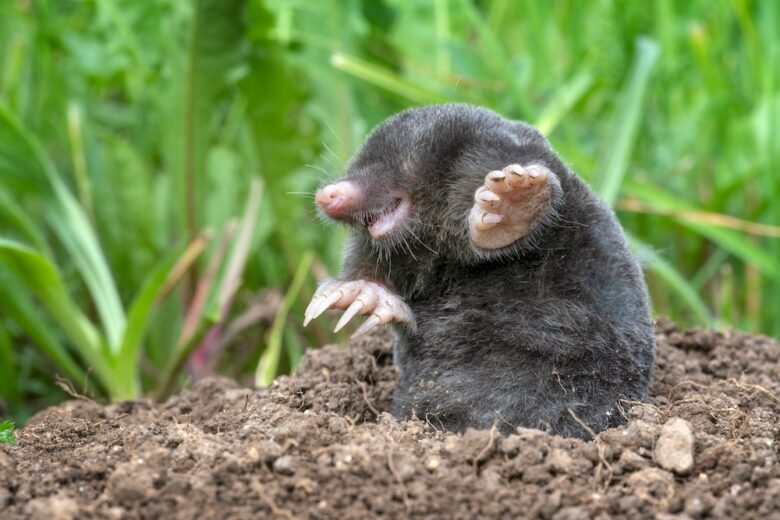
Molehills tend to appear overnight in neat lines, as though someone has been planting tiny volcanoes while you slept. Moles feed mainly on earthworms, but they’ll happily snack on grubs too.
So, a sudden burst of molehills can point to a healthy population of larvae living beneath your lawn.
They Diagnose the Problem Before Treating It
Working out what caused a brown patch is trickier than it seems, since several common lawn problems leave almost identical marks. Drought stress, dog urine, and fungal disease can all turn your grass brown in the same way grubs do.
This is where guesswork becomes an expensive hobby. You could spend an entire weekend faithfully watering a patch, only to discover it was being eaten from below the whole time.
A professional skips the guesswork with a few simple checks. They’ll lift a small square of turf, count the grubs in the top few centimetres of soil, and see whether the grass pulls away with no roots attached.
These checks also reveal how serious the infestation is. A handful of grubs may need nothing more than better lawn care, while a dense population calls for treatment.
They Time Treatments to the Pest’s Life Cycle
Once the culprit is confirmed, getting the timing right is everything. Most professionals now rely on nematodes, which are microscopic worms that seek out and kill grubs in the soil.
But nematodes are fussy about their working conditions. They need moist soil and temperatures of around 12°C or higher, and they’re most effective against young larvae.
In the UK, this usually means a window from late summer to mid-autumn. Chafer grubs are best treated in August and September, while leatherjackets respond well to applications in September and October.
Miss that window, and you’ll be waiting a full year for another chance. And the grubs will keep growing larger, hungrier, and much harder to control in the meantime.
If you’re reading this in October, you’re in luck. There’s still time to treat the soil before it cools for winter, provided you act soon.
They Use Methods That Are Safe and Legal
Not long ago, you could buy a chemical grub killer from almost any garden centre. Today, most of those products have been withdrawn from garden use in the UK over environmental concerns.
Professionals have adapted by combining nematodes with sensible lawn management and humane methods. This approach deals with the pests without harming the wildlife you’d prefer to keep around.
UK wildlife law also comes into play. Badgers digging for chafer grubs are protected under the Protection of Badgers Act 1992, so chasing them off with force could land you in serious trouble.
The sensible solution is to remove the grubs they’re feeding on. With nothing left to dig for, the badgers will soon take their appetite elsewhere.
Bringing in professional lawn care expertise means you’ll get a treatment that’s safe for your children, pets, and soil, and still tough enough to clear out the grubs.
They Repair the Damage and Build a Tougher Lawn
Getting rid of the pests won’t bring your grass back on its own. A professional will still need to restore the bare, chewed-up patches the grubs and diggers left behind.
They’ll scarify to remove dead thatch and aerate compacted soil so air and water can reach the roots. They’ll then overseed any bare areas, giving new grass the chance to establish before moss and weeds move in.
The long-term goal is thick, well-fed grass with deep roots. A lawn in this condition can tolerate a few grubs each year without showing any damage at all.
Mowing at the right height helps, too, since scalping the grass weakens it and leaves the soil exposed for egg-laying crane flies. Stick with this routine each season, and pests will have a much harder time gaining a foothold.
Conclusion
Well, that’s one breakfast buffet closed for good! The crows will have to find their morning meal somewhere else, and you can finally drink your coffee without banging on the window.
Now sit back, let the experts handle the grub hunting, and enjoy a thick, green lawn without a single crater dug by the crows!