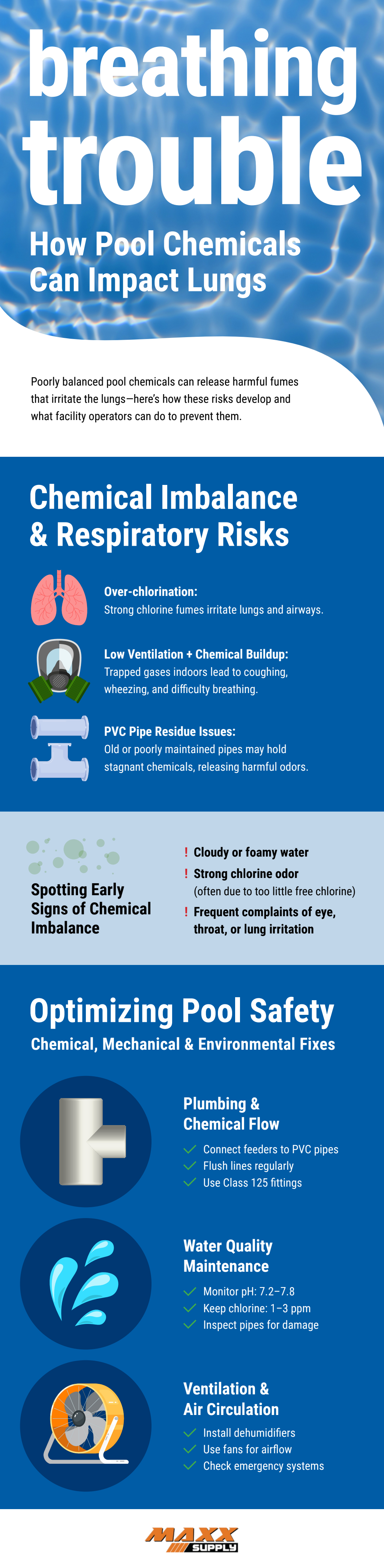
What’s in the air: How pool chemicals can affect your lungs

Swimming pools offer a place to relax and stay active, but the chemicals that keep water clean can also affect air quality. Chlorine and other treatments help control bacteria, yet they release fumes that may irritate the lungs. It’s important to know how these exposures can affect breathing.
How pool chemicals enter the air
Chlorine does not stay only in the water. It reacts with sweat, oils, and other substances, forming chemical byproducts. These byproducts can rise into the air just above the pool surface. Indoor pools may trap these fumes, making them easier to inhale. Poor ventilation can increase the concentration of these chemicals in the air.
Effects on lung health
Breathing in pool chemical fumes can irritate the airways. Some people may notice coughing, chest tightness, or a sore throat after time in or near a pool. For those with asthma or allergies, symptoms may become worse. Frequent exposure may lead to ongoing irritation. This can make breathing feel more difficult over time.
Who may be more sensitive
Some individuals react more strongly to pool chemicals. Women with asthma, respiratory conditions, or chemical sensitivities may notice symptoms faster. Children and older adults may also be more affected. Facilities that use systems like PVC schedule 80 pipe for chemical handling often aim to maintain stable water treatment, but air quality still depends on proper ventilation and maintenance.
Ways to reduce exposure
Limiting time in poorly ventilated pool areas can help. Choosing well-ventilated facilities reduces the amount of fumes in the air. Taking breaks from the poolside can also lower exposure. Showering after swimming removes chemical residue from the skin.
Pool chemicals play an important role in safety, but they can also affect lung health if exposure is high. Being mindful of air quality and personal comfort can help protect your breathing. For more information, look over the infographic below.