
Top trends shaping modern logistics networks

Key takeaways:
- Advancements in technology and sustainability are revolutionizing logistics networks.
- Understanding these trends is crucial for businesses aiming to stay competitive.
The world of logistics is rapidly evolving in response to intensified global demand, advancing technology, and changing consumer expectations. Companies of all sizes are challenged to optimize their supply chains and streamline operations to remain efficient and profitable. As firms look to adapt, industry leaders such as Freeport Logistics Inc. are offering innovative solutions and adapting to these trends, helping businesses meet new standards for speed, transparency, and sustainability.
Modern logistics networks must balance reliability with adaptability. Factors such as labor shortages, increased shipping costs, and the pressure for sustainable practices are requiring organizations to invest in intelligent systems that can automate workflows and provide actionable insights. Leveraging technology not only allows companies to overcome bottlenecks but also enhances customer satisfaction in an increasingly competitive landscape. The supply chain is no longer just about moving goods—it has become a strategic advantage driven by real-time information and integrated platforms.
Understanding these major trends is essential for companies seeking to future-proof their logistics operations. As the logistics sector continues to expand globally, digital integration, eco-friendly initiatives, and consumer-first solutions are rapidly shifting industry standards, affecting everyone from manufacturers to end customers.
With logistics and warehousing becoming more sophisticated, companies need to make informed decisions for optimal network design and supply chain resilience. For further insights on logistics innovations, visit https://www.freeport-logistics.com/.
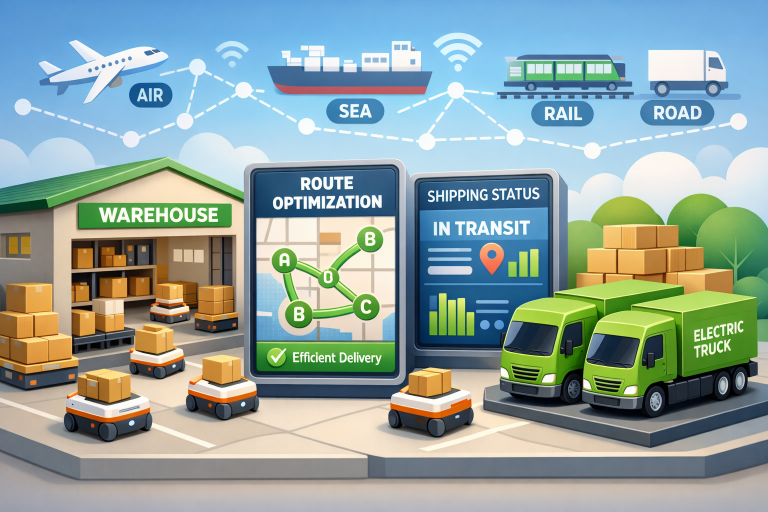
Below is a comprehensive table of contents to help you navigate the pivotal trends in modern logistics:
- Automation and Robotics
- AI and Predictive Analytics
- Sustainability Initiatives
- Multimodal Integration
- Customer-Centric Visibility
Automation and robotics
Automation and robotics continue to redefine warehouse and distribution operations on a global scale. Technologies such as autonomous mobile robots (AMRs) and automated storage and retrieval systems (AS/RS) are now crucial in supporting high-speed order fulfillment and boosting productivity. AMRs can navigate complex warehouse environments, transporting goods and performing repetitive tasks previously handled by human workers. Their adaptability reduces operational costs and addresses ongoing labor shortages, a significant issue amplified by the surge in e-commerce. According to Grand View Research, the global warehouse robotics market size was estimated at USD 4.93 billion in 2023 and is projected to reach USD 17.29 billion by 2030, growing at a CAGR of 19.6% from 2024 to 2030
Collaborative robots (cobots) add another layer of efficiency, enabling human workers to focus on more complex tasks while robots handle manual and routine activities. This synergy allows for improved throughput and accuracy, reducing errors and waste in the logistics process. Automation is not just a competitive advantage. It is quickly becoming an operational necessity for companies aiming to thrive in the digital age.
AI and predictive analytics
Artificial Intelligence (AI) and predictive analytics are revolutionizing how businesses plan, forecast, and make critical supply chain decisions. AI-driven software can process vast amounts of data in real time, providing insights into everything from demand forecasting to optimized inventory management. Predictive analytics help companies anticipate disruptions, identify risks, and create robust contingency plans.
Route optimization software, powered by machine learning algorithms, enables logistics companies to streamline delivery schedules, minimize fuel consumption, and balance capacity constraints efficiently. AI tools can automate critical decision-making, reducing human error and improving on-time performance. According to the World Economic Forum, AI combined with the growth in e-commerce, is driving a new era in logistics, demanding faster and more flexible networks capable of adapting to consumer needs.
Sustainability initiatives
The push toward sustainability is fundamentally restructuring logistics operations around the world. Environmental responsibility is no longer optional; it is a strategic imperative in supply chain management. Logistics firms are investing heavily in green logistics solutions, such as electric or hybrid vehicles for last-mile delivery, eco-friendly packaging alternatives, and energy-efficient warehouses. Many organizations are rethinking the location of distribution centers, using multi-warehouse fulfillment models that reduce delivery distances, lower emissions, and improve customer satisfaction.
Consolidating shipments and maximizing cargo loads further reduces fuel consumption and logistical waste. Retail giants are also using technology to track carbon footprints and report on progress toward net-zero commitments. The adoption of these initiatives aligns with consumer expectations for environmentally conscious brands and demonstrates companies’ commitment to future-forward strategies.
Multimodal integration
Seamless integration of varied transportation modes, such as sea, air, road, and rail, is enhancing supply chain resilience and efficiency. Multimodal logistics platforms combine these networks to create end-to-end solutions that significantly lower transit times and costs. Businesses are increasingly shifting away from traditional linear shipping methods in favor of interconnected options that provide greater operational flexibility and ensure continuity, even when faced with global disruptions.
More companies are turning to digital freight platforms and connected transport systems to manage complex logistics networks. The result is improved inventory visibility, better tracking, and responsive logistics capable of meeting evolving customer needs. As multimodal integration becomes more prevalent, supply chains grow more agile and less susceptible to risks from single-mode failures or bottlenecks. Further reading is available through The Wall Street Journal.
Customer-centric visibility
Today’s consumers demand more than fast shipping. They want full transparency throughout the delivery process. In response, logistics companies have invested in real-time tracking systems and integrated communication platforms, ensuring customers can monitor their shipments from origin to destination. This visibility builds trust, improves satisfaction, and reduces the number of service inquiries and disputes during the order fulfillment cycle.
According to Aptean, 90% of consumers now expect real-time shipment updates, and businesses that deliver on this promise stand out in a crowded market. Transparent communication, proactive notifications, and integrated delivery networks make it possible for logistics professionals to meet and exceed rising expectations. As technology continues to evolve, enhanced visibility will remain a critical differentiator in customer service for supply chain management.


