The no-extra-time fitness plan for busy professionals

A full calendar can make exercise feel like one more appointment. When work, commuting and other responsibilities compete for time, a plan that depends on a perfect 45-minute gap is hard to repeat. Look for realistic openings already built into your day.
This is not a shortcut to a particular health result. You can walk, stand or stretch without turning every meeting into a workout. Choose a longer session when your schedule allows, and protect time for lunch, focused work and rest.
Start with a realistic definition of “no extra time”
A no-extra-time plan uses natural transitions, before a meeting, after lunch or at the end of a work block, for movement that does not disrupt work or rest.
Adult activity recommendations advise at least 150 minutes of moderate-intensity aerobic activity each week, plus muscle-strengthening activity on at least two days. Shorter bouts of aerobic activity count. But a slow walk or stretch is not automatically moderate-intensity exercise, and short breaks do not replace strength work. Treat them as a way to interrupt long periods of sitting, not as a guaranteed health fix.
If you are mostly seated now, begin with a manageable change. Stand while you refill water, take a lap after a call or plan a walk you can finish without rushing. Choose something you can repeat.
Map the day you actually have
Before choosing a routine, observe a few workdays. Look for gaps that are genuinely usable rather than judging how active you are.
For three ordinary workdays, note:
- When you sit for the longest stretches
- Which calls do not require a screen, camera or written notes
- When you already get up for water or lunch
- Which tasks need your full attention
- Where you could walk safely
A gap before a client presentation may be better used to prepare; an audio-only check-in might suit a walk. Allow time for shoes, getting outside and returning to your desk. On commuting days, a walk between stops may be more practical than walking during calls. Look for weekly patterns, not a rigid daily template.
Match movement to the task
Choose movement based on what the task asks of you. Walking can be a poor fit for detailed reading, note-taking, screen sharing or a conversation where you need to respond quickly. It may suit a familiar audio call or a transition between tasks, provided you can stay attentive and move safely.
| Workday moment | Low-friction option | Check before you start |
| Before the first meeting | Walk around the room or block | Leave time to settle in and open your notes |
| Audio-only call | Walk at a comfortable pace | Confirm that listening and responding stay easy |
| Between focused tasks | Stand, stretch or take a short loop | Use the pause to reset rather than rush |
| Lunch break | Walk before or after eating | Keep enough time for lunch and other needs |
| End of the workday | Take an indoor or outdoor walk | Choose an option that helps you transition out of work |
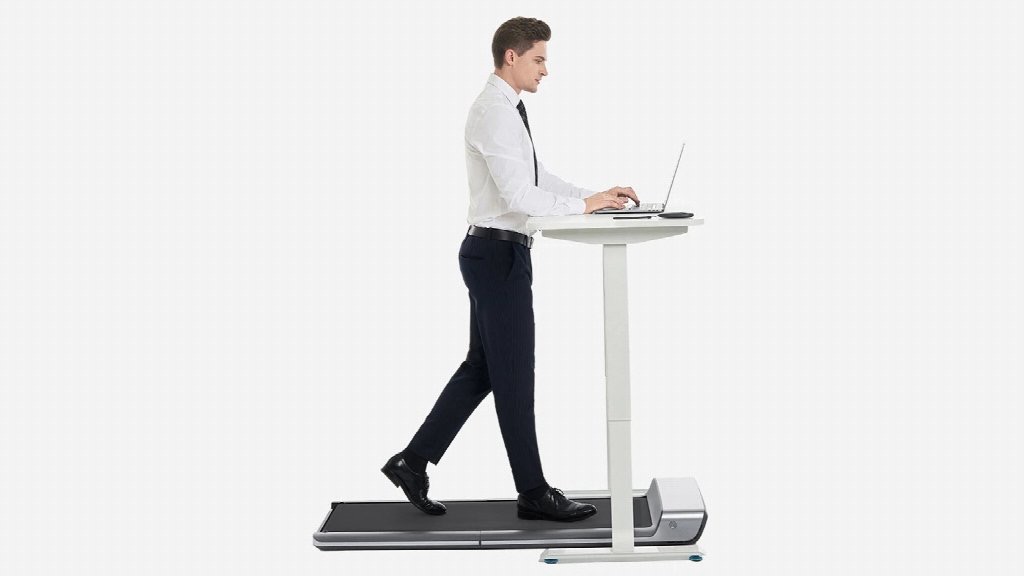
A standing break is fine when walking does not fit. Keep driving, caring responsibilities and other attention-heavy tasks first. If you want to explore the setup and trade-offs, see this guide to walking on a treadmill under a desk. For a walking call, test the route and audio beforehand; avoid traffic or uneven paths. Stop if the conversation becomes complex or confidential. A camera, shared documents or decisions you need to record are good reasons to sit and move later.
Build a flexible workday menu
Use a sample schedule as a menu, not a quota. Choose one or two options that suit the day, then adjust the timing when meetings move.
- Before work: Take a brief walk or do a few comfortable mobility movements while you review the day.
- After a morning task: Stand or walk during a call only if it does not require focused screen use.
- Lunch: Take a short walk before or after eating, or use the break to rest if that is what you need.
- Mid-afternoon: Pair a brief movement pause with a natural stopping point, such as sending a finished document.
- After work: Choose a walk as a transition when it feels useful; skip it when the day is already full.
If you choose a dedicated indoor walk instead, a gym treadmill is another option. The treadmill in the photo below illustrates that separate session, not a home-office walking pad or a way to walk through desk work.
The length can vary. A few minutes may be enough to break up a sitting stretch; a longer walk can count toward your weekly aerobic activity when its intensity is moderate. No single break schedule fits everyone. Pick a rhythm that works with your job and comfort, then change it if it creates pressure.
Make the routine easier to repeat
The routine is more likely to survive a busy week if it asks for fewer decisions. Connect movement to something that already happens: take a short walk after a recurring call, stand when you refill a drink, or step outside after lunch. A familiar cue can make the next action easier to remember without relying on motivation alone.
Prepare the practical details once. Put comfortable shoes near the door, keep a light layer handy if you walk outside, or choose a clear indoor route. If you work from home and prefer to walk indoors, check the available floor space, equipment instructions and room layout before using a treadmill or walking pad. Keep cords and clutter out of the route, and do not walk while handling tasks that need your eyes or hands. For help weighing room size, storage and equipment fit, see this guide to choosing compact home exercise equipment.
It can help to decide on three levels of the plan:
- Minimum: A brief stand, stretch or walk when the day is packed.
- Usual: One or two movement windows that fit your normal work pattern.
- Extra, when it suits: A longer walk or separate workout when time and energy allow.
These are planning options, not medical targets. If a block disappears, choose the next option that fits rather than trying to “make up” for it. When meetings run back-to-back, standing during a transition may be enough. On a quieter day, take a separate walk and leave your calls alone. If you are returning to activity after a long break, start gradually at a comfortable level.
Use this checklist to adjust your plan
At the start of the week, answer these questions. Keep the answers somewhere you already look, such as a calendar note or weekly planner.
| Planning question | Your answer |
| Which two or three moments could allow movement? | |
| Which calls or tasks are safe and suitable for walking? | |
| Which tasks need my full attention at a desk? | |
| Where can I walk safely indoors or outdoors? | |
| What is my easiest backup on a packed day? | |
| What sign would tell me to change the plan? |
At the end of the week, keep what fit and change what did not. A plan is working if it gives you useful choices without disrupting work, rest or responsibilities. You might find that an outdoor lunch walk suits you better than walking during calls, or that a few short pauses are more realistic than a fixed daily session. If you often miss the same window, replace it with a moment that is already part of your day rather than setting a reminder you will keep dismissing.

If an indoor walking setup would make movement easier to fit around your workday, you can look at the walking pad collection as an optional next step. Compare the space you have, how you plan to store the equipment and the type of walking you want to do; the checklist above works just as well if you decide not to buy anything.
A useful fitness plan does not need to compete with your calendar. Start with the day you have, choose movement that fits the task, and leave room to adapt. Small, realistic choices can help you interrupt long seated stretches and build toward a more active week, without treating a missed walk as another deadline.
Disclaimer: This article is provided for general informational purposes and is not a substitute for professional medical advice, diagnosis, or treatment. Individual health needs and responses to exercise can vary. If you have a medical condition, concerns about your health, or are considering changes to your exercise, diet, sleep, or daily activity, consult a qualified healthcare professional first.