Rotting costs: How food spoilage quietly affects wallets, health, and the planet

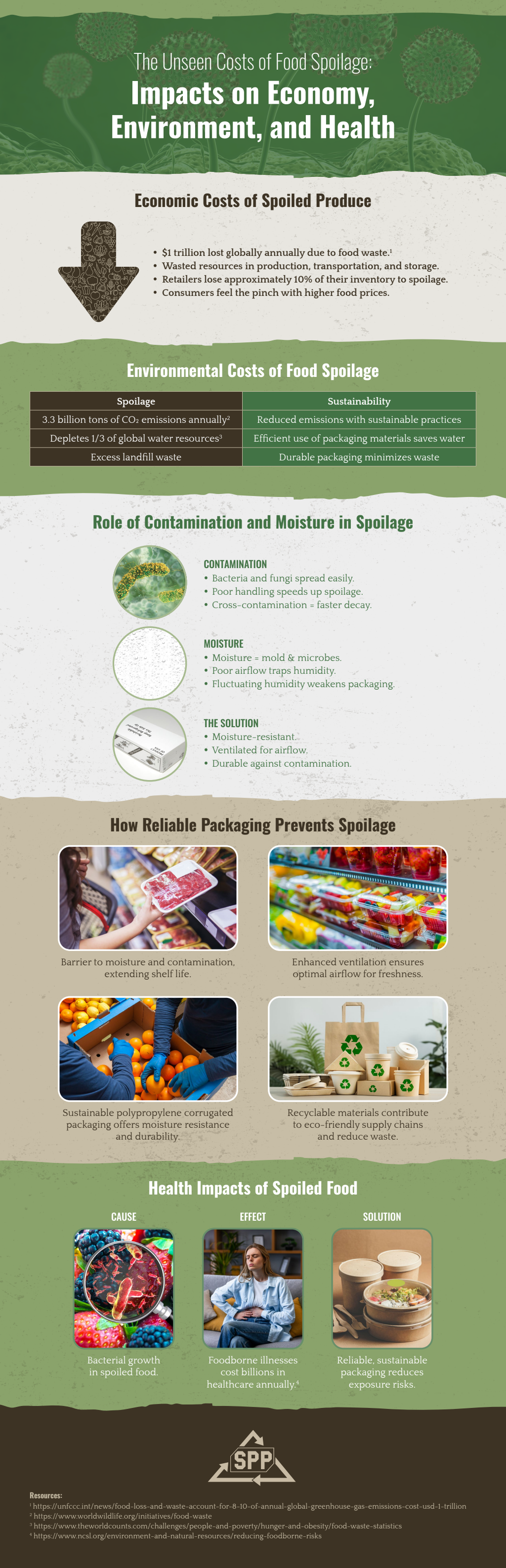
Food spoilage often seems like a small household issue. A forgotten bag of produce or leftovers pushed to the back of the fridge may not feel important. Across homes, stores, and supply chains, wasted food adds up quickly. The effects reach far beyond the kitchen.
Economic impact on households and communities
Spoiled food leads to direct financial loss. Families spend money on groceries that never get used. Businesses also feel the impact. Grocery stores and restaurants lose revenue when products spoil before sale. These losses often lead to higher prices for consumers.
Environmental consequences of waste
Food production requires land, water, and energy. When food spoils, these resources are wasted. Farms, transportation, and storage all use fuel and materials that cannot be recovered once food is thrown away.
Spoiled food in landfills creates methane gas, which contributes to air pollution. Packaging also plays a role. Better solutions, such as corrugated plastic packaging, can help protect food during transport and storage, reducing damage and spoilage.
Health and food safety risks
Spoiled food can pose health risks if consumed. Bacterial growth can lead to foodborne illness, which affects people of all ages. Seniors and children may face a higher risk. Confusion around expiration dates can also lead to unsafe choices. Clear labeling and proper storage help reduce these risks.
Simple steps to reduce spoilage
Planning meals and buying only what is needed can help reduce waste. Proper storage also makes a difference. Regularly checking food items helps prevent them from being forgotten. Small habits can lead to meaningful change over time.
Food spoilage may seem minor, but its effects are wide-reaching. From financial loss to environmental strain and health concerns, wasted food carries a real cost. Taking simple steps at home can help reduce waste and support a healthier, more efficient food system. Check out the infographic below for more information.