Managing family finances when you’re self-employed

Self-employment offers flexibility, independence, and greater control over your career. However, managing household finances becomes more challenging when income fluctuates and employer-sponsored benefits disappear.
For women balancing business ownership with family responsibilities, financial planning requires additional preparation. Establishing consistent habits can help protect household stability during unpredictable earning periods.
Build a Budget Around Variable Income
Traditional household budgets often assume predictable monthly paychecks. Self-employed professionals may experience significant income differences depending on client demand, seasonal activity, or delayed payments.
Calculate essential household expenses and establish a conservative monthly income estimate. During profitable months, transfer additional earnings into savings rather than immediately increasing spending.
Separate Business and Household Finances
Mixing personal and business expenses makes financial tracking difficult. Maintaining separate bank accounts provides clearer records for budgeting, taxes, and business performance.
Consider transferring a consistent amount from business earnings into your personal account. This approach creates a more predictable household income while preserving funds for operating expenses.
Plan for Taxes and Insurance
Self-employed individuals generally must manage their own income taxes and self-employment taxes. Setting aside money regularly and reviewing estimated tax obligations can prevent unexpected financial pressure.
Insurance deserves equal attention. Comparing health coverage options and term life insurance quotes can help families evaluate protection against medical expenses and lost income.
Establish Emergency and Retirement Savings
Without guaranteed earnings or employer retirement contributions, self-employed professionals must take greater responsibility for long-term savings. Emergency reserves are particularly important when business revenue slows.
Aim to build several months of essential household expenses in accessible savings. Retirement accounts such as SEP IRAs and solo 401(k)s may provide additional savings opportunities.
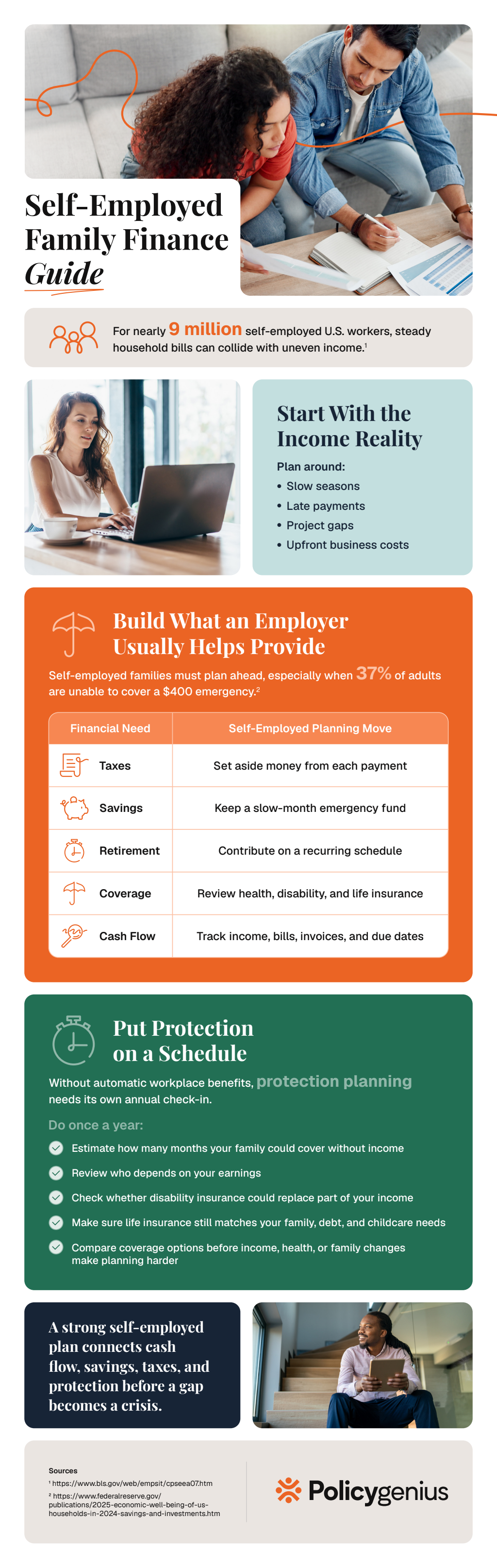
Financial stability requires planning beyond the next client payment. Reviewing these arrangements regularly allows households to adjust as business income and family needs change. Check out the accompanying infographic below to learn more.