
Lifelong learning: Building a future-proof workforce through continuous education

Key takeaways
- Continuous education is essential to keep pace with rapid technological advancements.
- Flexible learning options, such as online courses and microcredentials, cater to diverse needs.
- Employers value employees who proactively engage in lifelong learning.
- Overcoming barriers such as time constraints and financial limitations is crucial to widespread participation.
The necessity of continuous education
With technology rapidly transforming industries and reshaping career demands, the importance of lifelong learning has never been greater. Traditional education is no longer a finish line, but rather a foundation for ongoing growth and adaptability.
Today’s professionals must keep updating their skills to stay relevant, remain employable, and compete effectively in the global workforce. For fields such as science, technology, and environmental studies, specialized programs, such as water management courses, offer targeted knowledge and training to meet new career needs and industry standards in a changing climate and economy.
The increasing complexity of many job roles also drives continuous learning. New tools, emerging technologies, and evolving best practices mean that last year’s expertise can quickly become obsolete. A 2023 Instructure survey found that most workers worry they lack the necessary skills for future success, highlighting the urgent need for accessible, ongoing educational opportunities. Institutions and learners alike are responding by embracing models that support education throughout life’s stages, not just in early adulthood.
Flexible learning options
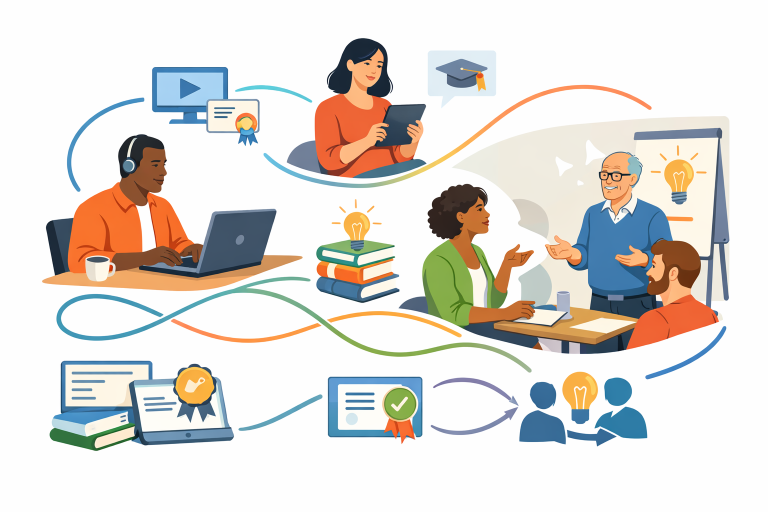
The demand for lifelong learning has sparked a revolution in educational accessibility and flexibility. Universities and accredited providers now offer online courses, microcredentials, certification programs, and hybrid learning pathways.
These flexible options allow professionals to upskill, reskill, or earn qualifications at their own pace without disrupting their career or family commitments. For example, the Harvard Extension School delivers a variety of learning modalities tailored to adult learners, including evening classes and fully online degree programs that prioritize adaptability.
Microlearning and modular curriculum design have also gained traction, breaking knowledge into smaller, manageable segments. This approach lets individuals customize their learning journeys to focus on in-demand skills and stay agile in a constantly shifting marketplace.
Employer support for lifelong learning
Forward-thinking organizations increasingly recognize that their success depends on a skilled and adaptable workforce. By investing in employee development, companies improve performance, foster innovation, and boost loyalty. Many employers now offer tuition reimbursement, access to online training platforms, and dedicated upskilling workshops.
Supporting employees’ educational ambitions has tangible business benefits. According to a recent Harvard Business Review article, companies that prioritize continuous learning achieve higher retention rates and greater workforce adaptability, which can translate into a competitive advantage in turbulent markets. Cultivating a learning culture also encourages employees to drive their own performance improvements, empowering them to keep pace with digital transformation and industry disruptions.
Overcoming barriers to lifelong learning
Despite these benefits, participation in lifelong education is often hindered by practical barriers. Time management tops the list, as working adults struggle to balance career, family, and study commitments. Financial limitations present another significant challenge for many would-be learners. These obstacles are especially pronounced for those in underserved or rural communities, where internet access and program availability may be limited.
To overcome these hurdles, collaborative efforts are necessary. Educational institutions are expanding scholarships and financial aid specifically for adult learners, while policymakers are supporting the development of cost-effective alternatives and public funding initiatives. Employers can contribute by allowing flexible schedules and providing on-the-job learning opportunities. Increased awareness about available resources ensures that more people can participate in the lifelong learning ecosystem. More insights on solutions and support systems are available from the Education Week special report.
The role of technology in lifelong learning
Technological innovation has transformed the delivery and reach of lifelong learning programs. Digital platforms, artificial intelligence, and immersive tools such as virtual and augmented reality provide learners with interactive, personalized experiences. These platforms not only make education more accessible across geographic boundaries but also facilitate adaptive learning that responds to each individual’s pace and interests.
For instance, AI-driven course recommendations and intelligent assessment tools help learners efficiently identify skills gaps and suggest targeted content, leading to optimal outcomes. As the adoption of mobile technology and high-speed internet increases, access to high-quality educational materials is more democratized than ever before. As covered in this New York Times article, these advancements continue to revolutionize global education and upskilling.
Building a culture of continuous improvement
Cultivating a mindset that values lifelong learning yields lasting benefits for individuals, businesses, and society. Encouraging curiosity, providing tangible opportunities to grow, and publicly recognizing learning achievements all help foster an environment where continual improvement becomes the norm.
Organizations that incentivize knowledge sharing, mentorship, and regular feedback loops inspire their teams to pursue personal and professional development. On a broader scale, communities and educational systems that champion lifelong learning prepare citizens for the demands of a dynamic world, fostering resilience and adaptability at local and global levels.
Conclusion
Lifelong learning is an investment in humanity’s ability to progress and thrive amid rapid change. By embracing continuous education, individuals acquire the tools needed to navigate evolving industries, while organizations and societies position themselves for economic and social advantage.
Accessible and flexible learning options, employer support, advances in technology, and collective efforts to remove barriers shape a future where education never truly ends. With commitment and collaboration, lifelong learning will empower people of all ages to face whatever challenges and opportunities lie ahead.


