
How today’s B2B sales teams win more business: Local visibility, AI productivity, and direct mail that closes
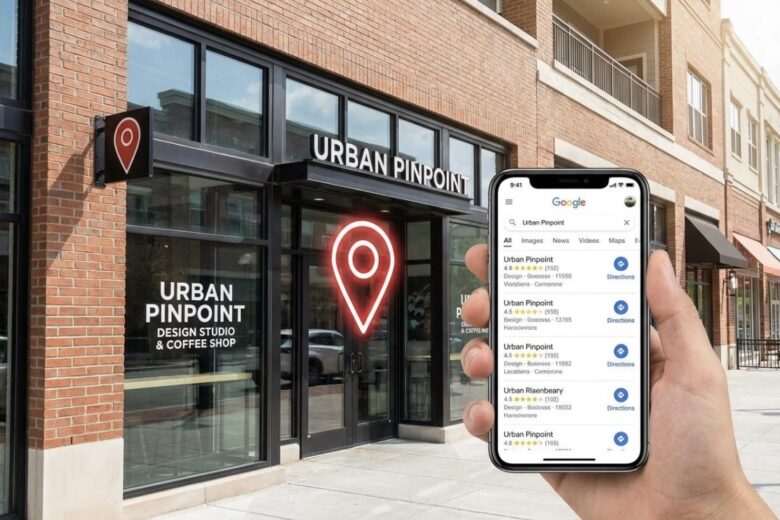
A local business appearing in Google search results – 78% of local mobile searches lead to an offline purchase within 24 hours.
Sales teams in 2026 face a harder job than they did five years ago. Buyers do more independent research, ignore more outreach, and expect faster follow-up when they do engage. The old playbook – cold calls, mass email, trade show booths – doesn’t produce the same results on its own anymore.
The teams consistently outperforming their targets aren’t using more tools. They’re using the right combination of tools that work together: local search visibility that puts them in front of buyers who are already looking, AI-powered productivity software that cuts the administrative drag out of every sales conversation, and physical direct mail that breaks through digital noise at exactly the right moment. This article breaks down all three and shows how they connect.
Building local visibility before your competitors do
Most B2B marketers think of local SEO as a retail concept. It isn’t. Any service firm with a geographic focus – consulting, staffing, legal, financial services, IT – competes for local search visibility just as aggressively as any brick-and-mortar shop. According to BrightLocal’s 2025 local SEO statistics, 46% of all Google searches have local intent, and 78% of local mobile searches result in an offline purchase within 24 hours.
That’s a huge pool of in-market buyers, and they’re going to whoever ranks first. The Brand Beacon Report 2024 found that 94% of high-performing brands have a dedicated local marketing strategy, compared to just 60% of average-performing brands. That gap isn’t a coincidence.
The core tactics are Google Business Profile optimization, consistent name-address-phone (NAP) data across directories, local content that answers region-specific questions, and link building from locally relevant domains. For firms in densely competitive markets, the difference often comes down to execution speed. Working with a local SEO company in Northern Virginia can compress that timeline significantly – particularly for service businesses targeting the DC metro corridor, where competition for regional search terms is intense.
Local visibility also feeds the rest of the sales funnel. When inbound leads come through organic local search, they already have intent. They’re not cold. That changes every downstream step, from how reps open calls to how quickly deals move.
For firms running multichannel marketing strategies, local SEO acts as the top-of-funnel engine that fills the pipeline before any paid or outbound effort touches it.
SaaS companies and the SEO growth trap
SaaS SEO requires funnel alignment across awareness, consideration, and decision-stage content – generic blog output alone won’t drive pipeline.
There’s a specific version of this problem for SaaS companies. Most SaaS teams invest in content marketing early, produce a lot of blog posts, and then wonder why organic traffic isn’t converting into trials or demos. The issue isn’t output volume. It’s that generic SEO and SaaS SEO are fundamentally different disciplines.
Generic SEO chases traffic. SaaS SEO chases pipeline. That means optimizing for buyer intent at every stage – comparison pages, use-case pages, integration content – not just informational blog posts. It also means building category-level authority so that when a buyer types “best [tool category] for [specific workflow],” your product is in the conversation.
The Salesforce State of Sales 2025 report found that 81% of sales teams now use AI in their processes, and AI-adopting teams are 83% more likely to report revenue growth compared to 66% for teams that haven’t adopted it. For SaaS companies, this creates an opportunity: buyers are already sold on AI-assisted workflows. The job of SEO is to put your product in front of them when they’re searching for solutions.
AI tools that reclaim selling time
AI meeting tools automatically generate call summaries and push action items to CRM – no manual entry required after the call ends.
The HubSpot State of Sales Report 2025 put a number on a problem every sales manager already knows: reps spend only 28% of their working week on actual selling. The other 72% goes to administrative work – updating CRM records, writing follow-up emails, preparing call notes, and scheduling.
AI tools are changing this ratio. According to ZoomInfo’s State of AI 2025 report, AI tools give go-to-market professionals a 47% boost in productivity and save an average of 12 hours per week. That’s nearly a full day and a half returned to selling every week, per rep.
Meeting intelligence is one of the fastest-growing categories in the AI productivity space. These tools join calls, transcribe conversations in real time, extract action items, and sync updates directly to your CRM without any manual input. For sales teams running high call volume – especially teams doing discovery calls, demos, and follow-up conversations simultaneously – the difference in follow-up speed is measurable. Finding the best AI meeting note taker for your team’s workflow matters more than most managers realize, because follow-up speed directly affects close rates when multiple vendors are in the mix.
The same Salesforce 2025 data confirms this: 81% of sales teams using AI report being more likely to hit their revenue targets. The competitive gap between AI-equipped reps and those still doing manual notes after every call is only widening.
Closing the loop with direct mail
Pairing physical mail with digital touchpoints lifts campaign response rates by 118%, according to the ANA/DMA Response Rate Report 2025.
Here’s the channel most B2B teams have quietly abandoned – and why that’s a mistake. According to direct mail response rates data, direct mail averages a 4.4% response rate compared to just 0.12% for email. That’s not a rounding error. It’s a 36x difference in response.
The ANA/DMA Response Rate Report 2025, cited via UPrinting’s direct mail statistics, also found that campaigns combining direct mail with digital channels see a 118% lift in response rate compared to digital-only campaigns. That number explains why high-performing sales teams are bringing physical mail back into the mix – not as a replacement for digital, but as the channel that closes the loop.
The best use cases aren’t random. Direct mail works hardest when it’s targeted:
- Re-engaging prospects who attended a demo but went quiet
- Following up on leads flagged by AI meeting tools as high-intent but not yet converted
- Local territory campaigns tied to your organic local SEO presence – someone who found you through local search gets a personalized postcard reinforcing your regional expertise
- Sending physical case studies or personalized proposals after a prospect downloads digital content
Direct mail lead generation works best when it’s timed to specific behaviors, not sent on a broadcast schedule. The more precise the trigger, the higher the response.
Stack the channels, don’t pick one
The teams winning in 2026 don’t treat local SEO, AI productivity tools, and direct mail as competing budget line items. They treat them as a system where each layer feeds the next.
Local search visibility brings in prospects who are already looking. AI meeting tools ensure every conversation is captured, followed up quickly, and fed into the CRM without the rep losing time to manual entry. Direct mail re-engages the prospects who expressed interest but didn’t convert, using physical touchpoints that digital outreach can’t replicate.
The audit most sales and marketing teams need right now is simple: which layer is missing? If the inbound pipeline is thin, local visibility is probably underinvested. If deals are stalling after the first call, AI productivity tools might be the gap. If prospects are going dark after demos, direct mail follow-up is worth testing. Most teams are strong in one layer and weak in the other two. Fixing that imbalance is where the next round of growth comes from.


