How to tighten loose skin after weight loss: A practical guide

You’ve spent months, maybe years, building new habits. The scale says you’ve reached your goal, you have more energy, and your clothes fit differently. Your skin, though, hasn’t quite caught up, and you notice it every time you get dressed for a meeting or a night out.
If you’re wondering how to tighten loose skin after weight loss, the honest answer is that it depends on how much you have, how long it took to develop, and what you want from the result. This guide covers why it happens, what you can do on your own, what doesn’t work, and when it makes sense to bring in a professional.
Why Skin Doesn’t Always Bounce Back
Skin is made to stretch and recover, but its two key proteins, collagen and elastin, can only take so much strain. Carrying extra weight for a long time stretches those fibers, and when the weight goes, the skin may not retract to match your new shape. For women, a few additional factors play a role:
- Pregnancy. The abdominal skin stretches to make room for a baby and may stay looser afterward.
- Menopause. Falling estrogen levels speed up collagen loss, so skin tends to rebound less in and after midlife.
- Age and genetics. Collagen production slows over time, and some people’s skin simply recoils better than others’.
- Size, speed, and duration. The more weight you lost, the faster it came off, and the longer you carried it, the more skin there is to adjust.
- Sun and smoking. Both break down collagen.
How Much Loose Skin Do You Have?
The best approach depends on the amount of loose skin. Think of it in three rough levels, and keep in mind that only a professional can give you a real assessment.
- Mild. The skin looks slightly soft or crepey but still springs back when pinched. This level often improves on its own over a period that can stretch from about six months to two years, and healthy habits give it the best chance.
- Moderate. There is visible looseness, but the skin still has some elasticity. Habits remain the foundation, and many people at this level ask a professional about in-office treatments that stimulate collagen.
- Significant. The skin hangs in folds and doesn’t snap back. Non-invasive treatments can’t remove excess skin, so surgery is usually the most effective option here.
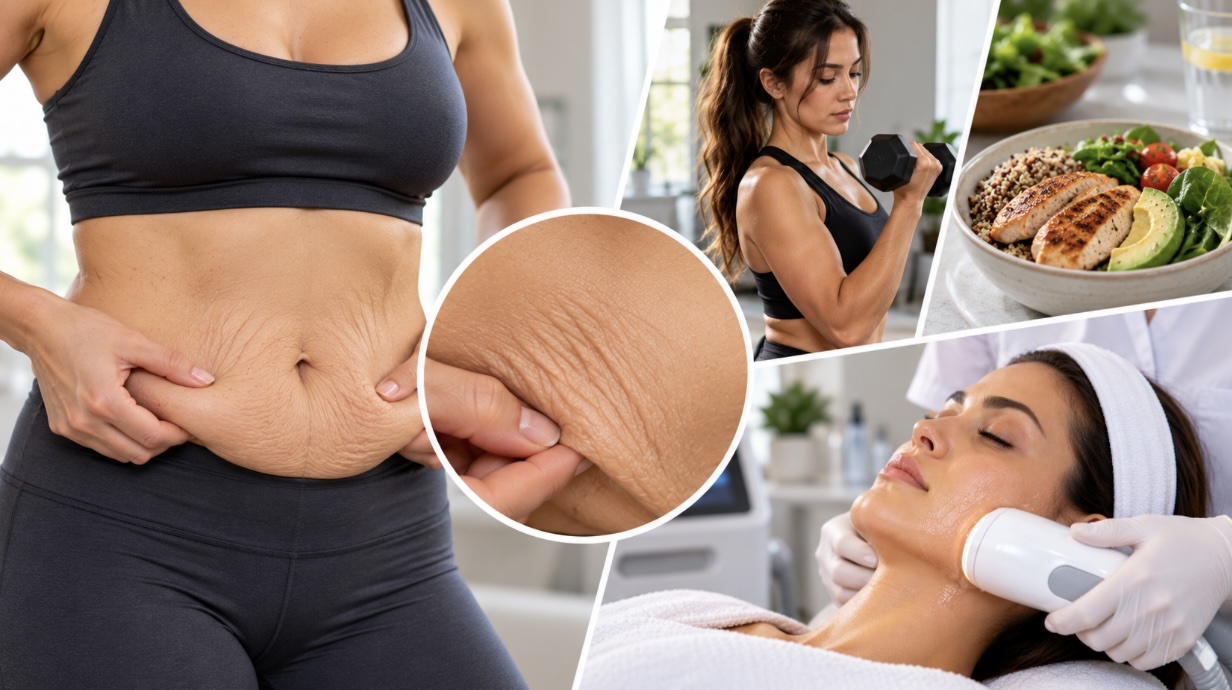
What You Can Do on Your Own
- Keep your pace steady. If you’re still losing weight, steadier is better for your skin than a crash diet.
- Build strength. Resistance training adds muscle that can fill out the area under loose skin and improves overall tone.
- Eat enough protein. It supports muscle and skin repair, especially while your weight is changing.
- Protect your skin. Wear sunscreen daily and avoid smoking.
- Moisturize and ask about retinoids. Moisturizers improve softness, and retinoids can support collagen over time, but neither tightens significant looseness. Ask a dermatologist what is right for you, and avoid retinoids if you are pregnant or trying to conceive.
- Give it time. Skin changes slowly, so judge your results over months rather than weeks.
What Doesn’t Work
- Miracle creams and body wraps. They may hydrate the skin or temporarily make it look plumper, but they can’t rebuild collagen or tighten significant looseness.
- Collagen supplements and “skin-tightening” pills. The evidence is limited and mixed, and no supplement replaces what skin has lost. Check with your doctor before starting anything.
- At-home gadgets. Consumer devices generally deliver less energy than professional ones, so expect modest results at best.
- Crash diets. Dropping weight fast to fix the problem can leave skin looser and cost you muscle.
In-Office Treatments, Explained Simply
In-office treatments such as radiofrequency, ultrasound, laser, and microneedling use controlled energy or tiny injuries to prompt the skin to rebuild collagen. They’re usually considered for mild to moderate looseness, and the results are gradual and modest rather than dramatic.
Some need several sessions, downtime is often minimal, and temporary redness or swelling is common. Rare risks include burns and pigment changes, which is why a provider’s experience matters, especially for darker skin tones. Also check what a specific device is cleared for. FDA clearance applies to particular devices for particular uses, and many areas of the body aren’t covered. Sofwave, for example, is an ultrasound treatment that takes about 30 to 45 minutes, so it can fit into a lunch break, and it is FDA-cleared for facial lines and wrinkles, lifting lax skin under the chin and neck, and improving the appearance of upper-arm skin laxity.
When Surgery Makes Sense
For significant excess skin, surgical body contouring, such as a tummy tuck, arm lift, or thigh lift, removes skin that nothing else can. The trade-offs are real: scars, weeks of recovery, surgical risks, and a higher cost. Many surgeons prefer your weight to be stable for several months before operating.
In some cases, insurance may cover removal of excess skin when it causes recurring rashes or infections, so ask your doctor and your insurer. Cosmetic procedures are typically not covered.
Planning for Cost and Time
Most cosmetic treatments are paid for out of pocket, so ask for a written estimate that includes every session, follow-up visit, and any aftercare supplies. Non-invasive treatments usually fit around a work schedule, while surgery typically means taking time off and arranging help at home.
If you’re working toward a big event or deadline, leave plenty of room. Results from collagen-based treatments take weeks to months to show.
Questions to Ask at Your Consultation
- What level of looseness do I have, and what do you recommend for it? Ask for an honest assessment.
- What results are realistic, and how will we measure them? Ask what the downsides and limits are.
- What are the risks, the downtime, and the aftercare? Get these in plain language.
- What is the full cost, including follow-ups? Ask what is and isn’t included.
- How many patients like me have you treated? Ask to see results from similar cases.
Loose Skin and Confidence
Finding something new to feel self-conscious about after so much effort can be frustrating. Plenty of people feel this way, and it takes nothing away from your achievement. If worries about food, weight, or your body begin to dominate your thoughts, reach out to your doctor or a mental health professional for support.
When to See a Doctor
Book a medical appointment if skin folds keep developing rashes (this is known as intertrigo), irritation, or infections, if the extra skin interferes with workouts or everyday tasks, or if the weight came off unintentionally.
Final Thoughts
You can’t always tighten loose skin after weight loss on your own, but the choices are broader than most people expect. Mild cases often improve with time and good habits, moderate cases may respond to in-office treatments, and significant excess skin usually calls for surgery.
Your next step is to book an appointment with a board-certified dermatologist or a plastic surgeon. After examining your skin, they can recommend a plan that suits your goals, budget, and schedule. This guide is meant to inform, not to replace advice from your own healthcare provider.