
How to prolong the life of your home appliances

Key takeaways
- Routine cleaning and basic maintenance extend appliance lifespan and reduce repair costs.
- Adherence to manufacturer guidelines ensures optimal functioning and safety.
- Timely replacement of minor parts helps prevent larger issues from arising.
Table of contents
- Regular Cleaning and Maintenance
- Following Manufacturer Guidelines
- Proactive Part Replacement
- Avoiding Overloading
- Maintaining Proper Ventilation
- Using Appliances as Intended
- Monitoring Energy Consumption
- Scheduling Professional Inspections
Keeping your home appliances in excellent condition can save you money, reduce waste, and prevent household routines from being interrupted by unexpected breakdowns. Even simple steps taken routinely can dramatically enhance the efficiency and longevity of everything from your refrigerator to your washing machine. If you need replacement components, a reliable Samsung OEM parts retaileroffers a wide selection of original parts to help maintain your appliances in peak condition.
Small habits can have significant impacts on performance. Cleaning, proper usage, and scheduling regular inspections all contribute to keeping your appliances operating smoothly. Proactive maintenance can prevent many costly issues and create a safer, more efficient home environment for you and your family.
Regular cleaning and maintenance
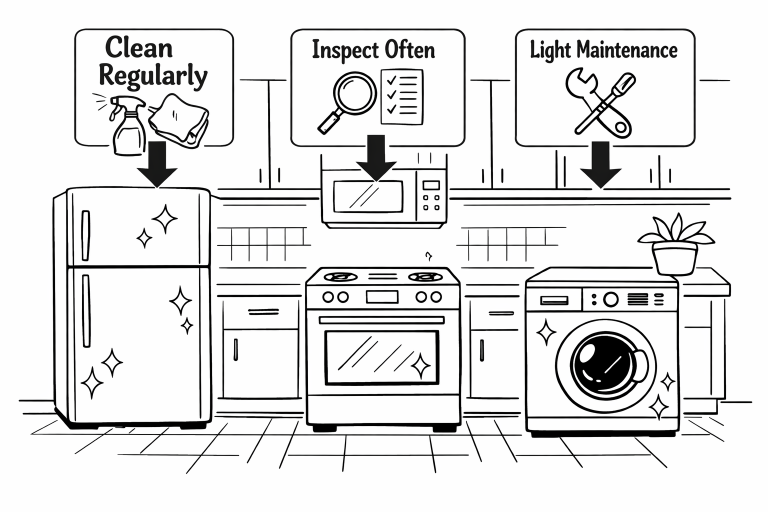
Neglecting basic cleaning tasks is one of the leading causes of appliance inefficiency and failure. For example, a refrigerator with dirty seals or clogged condenser coils has to work harder to maintain temperature, which can shorten its operating life and increase electricity bills.
Similarly, ovens, dishwashers, and washing machines accumulate grime and residue over time, which may affect performance or even pose safety hazards. Set a reminder to deep-clean appliances seasonally and wipe surfaces regularly to keep them running efficiently. According to experts at Angi, scheduled cleaning prevents the buildup of food particles and detergent, reducing long-term maintenance costs.
Following manufacturer guidelines
Each appliance is engineered with specific usage and maintenance directions. Regularly consulting your owner’s manual gives you clarity on the correct cleaning agents, parts replacements, and usage instructions, all of which help in minimizing problems. Ignoring manufacturer advice can void warranties or lead to improper cleaning that wears out sensitive components. Using the recommended settings and cleaners helps maintain peak performance and energy efficiency.
Proactive part replacement
Part failure rarely happens without warning. Appliances often show smaller issues long before a breakdown. Hoses, filters, belts, and seals are exposed to heat, movement, and moisture, and these parts wear out more quickly than the main unit. Replacing a fraying washing machine hose or a dirty air filter before it breaks can save you from water damage, inefficient operation, or hazardous conditions. Resources like Consumer Reports recommend tracking the age and condition of these components so maintenance is never left to chance.
Avoiding overloading
Many people inadvertently shorten the lifespan of their appliances by overloading them. Washing machines, dishwashers, and dryers all have recommended capacities. Overloading strains the motors and can accelerate the wear of components such as bearings and belts. It also leads to incomplete cycles, so you end up running the appliance more often than necessary. Always respect the indicated load limits for your appliances to ensure optimal cleaning and longer-lasting machinery.
Maintaining proper ventilation
Good ventilation is necessary for certain appliances to avoid overheating. Refrigerators and dryers, in particular, require proper airflow around and through them. Dusty, blocked vents not only decrease efficiency but also create a risk of overheating or fire. For example, cleaning your refrigerator’s coils twice a year and ensuring your dryer vent is free of lint can prevent heat buildup and keep both appliances functioning safely and efficiently.
Using appliances as intended
Appliances are designed for specific uses. Using a microwave to dry clothes or placing heavy items on a refrigerator can lead to irreparable damage. Treat appliance doors, handles, and buttons with care, and use accessories and attachments meant for the specific appliance model. Misuse can void warranties and reduce lifespan, whereas using appliances as intended helps prevent unnecessary wear.
Monitoring energy consumption
Regularly reviewing your monthly power usage is an effective way to detect potential problems early. Sudden or unexplained increases in electricity consumption can signal malfunctioning appliances, inefficient systems, or hidden issues such as failing motors or damaged components. Monitoring these changes allows you to investigate the cause before it worsens. Taking prompt action not only helps reduce unnecessary energy costs but also prevents additional strain on equipment, extending its lifespan and avoiding more expensive, time-consuming repairs later.
Scheduling professional inspections
While you can handle much of the routine maintenance yourself, a certified technician offers added peace of mind through expert diagnostics. Professionals can check for early signs of wear, lubricate moving parts, or recalibrate temperature settings for improved energy use. Regular inspections can extend an appliance’s useful life and help homeowners avoid emergencies. For further advice on scheduling and what to expect during an appliance check, visit HouseLogic.
By developing a regular care routine and addressing issues early, you help your appliances last longer, operate more efficiently, and ultimately reduce your environmental impact. These straightforward steps create a more sustainable, cost-effective home.


