How to choose takeaway packaging for your food business

You have perfected your recipes, worked out your prices and found customers who love what you make. Then a takeaway order arrives with a leaking lid, a crushed box or chips that have lost their crispness.
For a small food business, packaging is part of the product customers receive. It affects presentation, service speed, storage space and the cost of putting mistakes right. Whether you run a café, a catering business or a delivery kitchen, start with your menu, test samples and compare the cost of a complete order before buying in bulk.
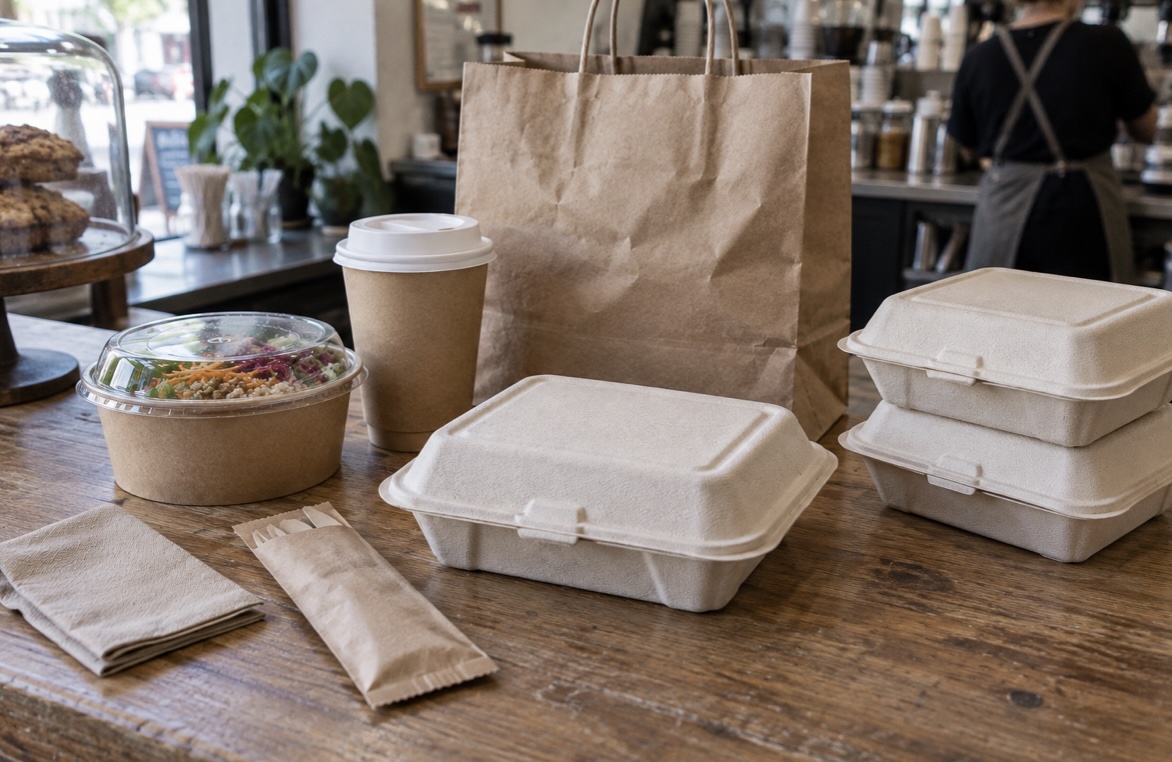
Start with your menu and delivery conditions
A cold salad, a hot curry and a freshly baked pastry present different challenges. Temperature, moisture, oil and the time between packing and eating all affect how a container performs.
Write a short brief for each main product: its temperature when packed, whether it contains sauce or oil, the expected delivery time and whether orders will be stacked. Include portion dimensions, toppings and any reheating needs.
Be specific. “Holds a hot rice dish with sauce during a 40-minute delivery” gives a supplier more useful information than “suitable for hot food”. It also gives you consistent conditions for comparing samples.
Compare the finished product and its material
Paper, sugarcane bagasse and cornstarch-based products are available for foodservice packaging. However, a material name alone does not tell you whether a particular product will suit your menu.
When comparing suppliers of custom biodegradable food packaging such as EcoLeaderPack, ask for product specifications and samples alongside the catalogue. Compare the intended food use, dimensions, lid options and supporting documentation for each item.
Paper packaging includes cups, bowls, bags and food boxes. For containers holding liquids or moist food, ask about the coating, intended use and matching lid. The finished construction matters as much as the paper itself.
For meals that need a rigid container, sugarcane bagasse tableware offers formats such as clamshell boxes, bowls, trays and plates. Bagasse is the fibre remaining after sugarcane processing. Check the closure, rigidity and performance of the specific container with your actual food.
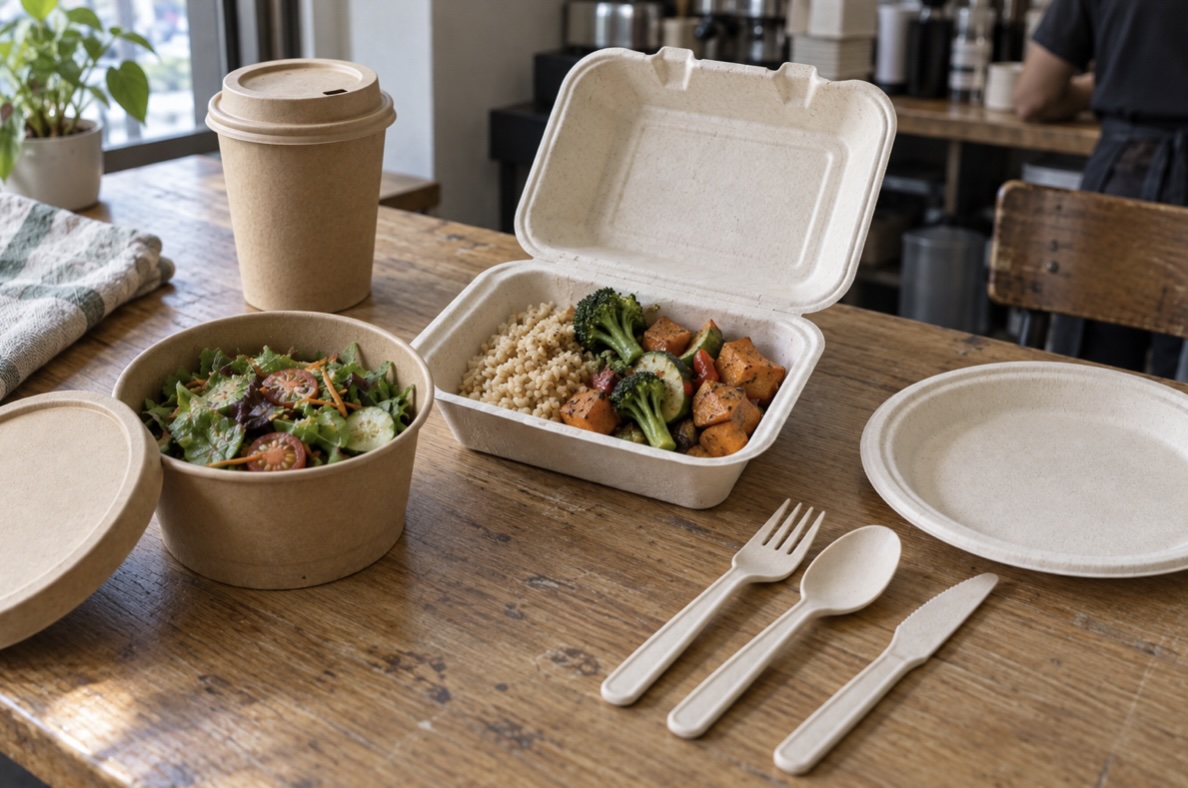
For cornstarch-based products, request the material composition and use instructions. Do not assume that every plant-based product has the same temperature limits or disposal requirements. Confirm that any biodegradability or compostability evidence applies to the finished item you plan to order.
Test samples through a complete service cycle
An empty container can look convincing on a desk. The useful test happens when it goes through your normal service routine.
Fill samples with your usual portions at the usual serving temperature. Close them as your team would during a busy shift, then leave them packed for a realistic collection or delivery period. Check for leaks, changes in shape, condensation and difficulty opening or closing the lid.
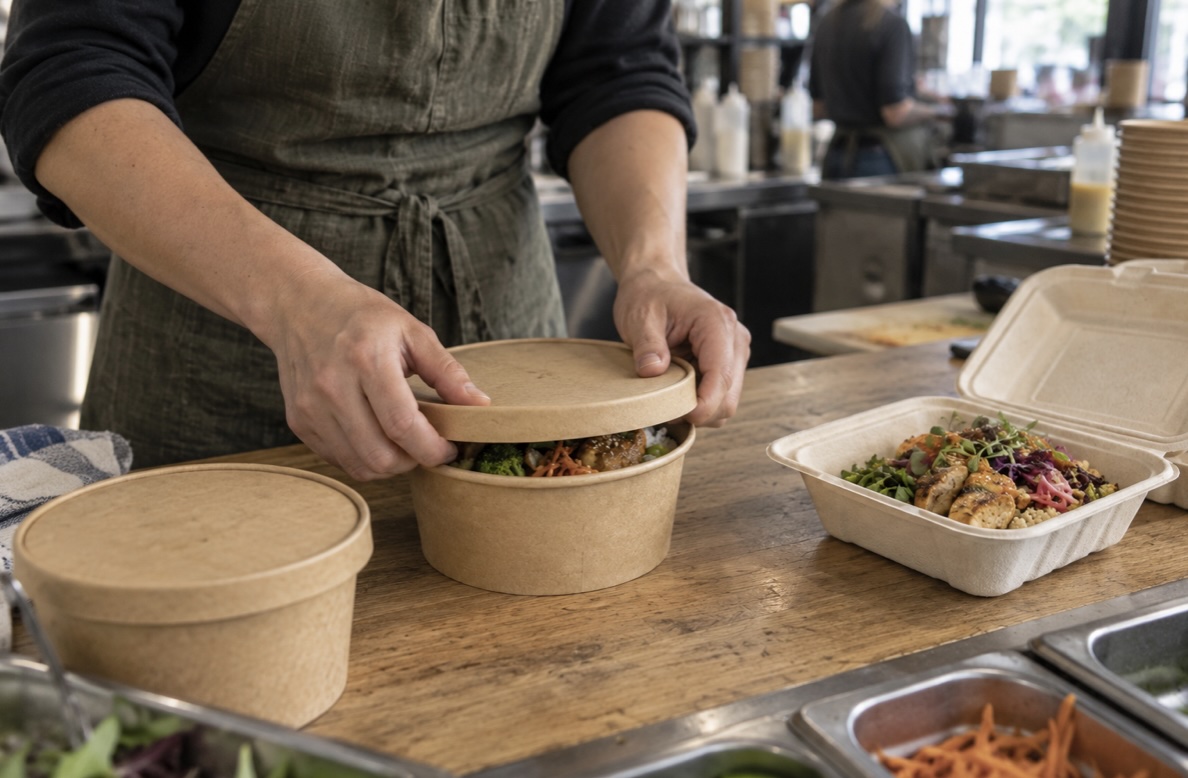
Include your most demanding dishes. A container that works for a dry sandwich may perform differently with a saucy meal. Test how the packs stack and whether they fit comfortably inside your delivery bags.
Ask staff to record their feedback. If a lid takes several attempts to fit or containers are difficult to separate, the problem becomes more noticeable when orders arrive quickly. Keep an approved sample and its product code as a reference for the first bulk shipment.
Calculate the cost of a complete order
Compare everything needed to pack an order: the container, lid, bag, label, cutlery and any protective accessories. Include delivery charges and, where applicable, import costs.
For illustration, a 12p container with a separate 6p lid costs 18p before accessories. A 16p hinged box may cost less for the complete pack if it performs equally well. These prices are hypothetical; the point is to compare the same finished order.
Check environmental claims and disposal routes
If sustainability is part of your brand, choose wording you can explain and support. “Plant-based”, “biodegradable”, “compostable” and “recyclable” describe different properties. Request evidence covering the finished product, including its coating or lining where relevant.
Home compostability and industrial compostability require different conditions. Ask your supplier which conditions the finished item is certified for, and check whether your waste contractor accepts that specific packaging. For takeaway customers, consider whether the disposal instructions are useful in the areas you serve.
Check the lid separately from the base: the two components may use different materials and need different disposal routes. Avoid broad statements such as “completely harmless to the environment”. Give customers a specific material description and supported disposal instructions.
Keep your packaging range manageable
Where practical, choose formats that work across several dishes. Check whether different container sizes share a lid, and label stock so staff can find matching components easily. Portion fit still matters: an oversized box can make a meal look smaller and allow food to move during transport.
Ask how many units come in a carton and check carton dimensions against your available space. A lower unit price may not justify tying up cash or filling the stockroom. Base the first order on realistic demand and supplier lead times.
Consider custom printing once the format and demand are established. Confirm artwork requirements, minimum quantities and setup charges. If your menu is still changing, plain packaging with an appropriate branded label may offer more flexibility.
Plan for repeat orders
Before ordering in bulk, confirm product codes, packing quantities, lead times and the process for reporting damaged or incorrect goods. Ask whether changes to materials, dimensions or lids will be communicated before shipment.
Keep the approved specification with your ordering records and recheck incoming stock against it. Start with a manageable trial order where available. Monitor customer feedback, packaging failures and actual usage before increasing your commitment.
Make your next packaging decision practical
Choose one frequently ordered dish, write its packaging brief and test a shortlist of samples. Once a format protects the food, works for your team and fits your budget, use that same process for the rest of your menu.