
How to build a better New York City food itinerary by neighborhood, budget, and mood

Key Takeaways
- Choose dining areas that match the day’s main activities.
- Set a full-day food budget before choosing restaurants.
- Mix one important reservation with flexible walk-in options.
- Use cuisine, timing, and atmosphere to match each occasion.
- Leave room for snacks, markets, cafés, and spontaneous finds.
- Confirm current hours, menus, accessibility, and booking policies.
New York City is easier to enjoy when food supports the day instead of taking it over. Rather than chasing a long list of famous places, build a route around where you will be, what you want to spend, and how you want each meal to feel. A curated guide to the best restaurants in New York can be a useful starting point, but the best choice is still the one that fits your plans.
A practical itinerary leaves room for a great reservation, a quick slice, a coffee break, and an unexpected stop at a bakery. It also avoids the common problem of spending more time on trains, in traffic, or waiting in line than enjoying the city.
Why A Food Itinerary Beats A Long Restaurant List
New York has more options than any visitor can reasonably fit into one trip. A list may tell you what is popular, but it cannot account for your museum tickets, hotel location, group size, energy level, or dinner plans. An itinerary turns those details into useful filters. It helps you avoid booking lunch downtown and dinner far uptown with no reason to cross the city twice.
Keep the plan flexible, not rigid. Pick one or two priority meals, then give yourself nearby alternatives for everything else. That approach protects the day when the weather changes, a restaurant is full, or a neighborhood turns out to be more interesting than expected.
Start With The Shape Of The Day
Begin with what is already fixed. A sightseeing day in Lower Manhattan, a museum-and-park day, a shopping afternoon, a Broadway evening, a waterfront walk, or a relaxed weekend each creates different food needs. Keep most meals within the same general area unless a destination is truly worth the travel time.
For example, a theater night calls for an early, reliable dinner near Midtown. A gallery-focused afternoon may work better with a light lunch and a slower dinner in the Village. For a broader borough-by-borough plan, consult the NYC Neighborhood Planning Playbook before deciding where to spend the day.
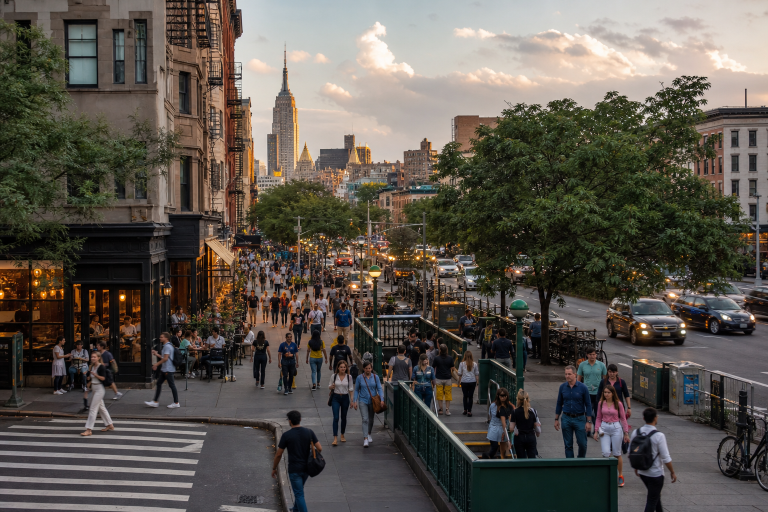
Pick A Neighborhood That Matches The Mood
- Downtown: Best for casual meals, food walks, historic sights, and late-day plans.
- Midtown: Practical for business lunches, quick stops, and pre-show meals.
- Greenwich Village and West Village: Well-suited to cafés, relaxed dinners, and date nights.
- Chinatown and the Lower East Side: Great for shared plates, snacks, and lower-cost meals.
- Brooklyn: Ideal when you want to spend a full day mixing food, shops, parks, and local attractions.
- Queens: A strong choice for international variety and a more exploratory dining day.
Set A Realistic Food Budget
Restaurant prices change, so think in spending levels rather than fixed totals. A lower-cost day might include a casual meal, a snack, and a simple drink. A moderate day can include a sit-down lunch or dinner plus coffee and a treat. A special-occasion day should allow for drinks, dessert, service charges, taxes, tips, deposits, and transportation.
Check current menus before committing, especially when ordering shared plates or dining with a group. A meal that appears affordable at first glance can become much more expensive after additions and gratuity are added.
Match The Restaurant To The Occasion
The right setting matters as much as the menu. For date night, prioritize comfortable noise levels, easy conversation, and shareable dishes. For groups, look for flexible seating, a broad range of options, and a clear payment process. Families usually benefit from fast service, simple dishes, and nearby restrooms. Solo diners may prefer counters, bar seats, or quick-service spots.
For business meals, check the lunch pace, table spacing, and sound level. For celebrations, confirm dress codes, reservation deposits, minimum spend requirements, and cancellation terms before inviting anyone.
Use A Simple Three-Meal Framework
- Breakfast: Keep it near your hotel, transit stop, or first activity.
- Lunch: Try a new neighborhood or choose a faster format such as a market, counter, or food hall.
- Dinner: Make this the day’s main meal and place it near evening entertainment or your final destination.
Add a snack window between lunch and dinner. This is the best time for bakeries, carts, cafés, specialty shops, or a market stop without arriving at dinner overly hungry.
Plan Around Reservations, Waits, And Dietary Needs
Book high-demand dinners early, arrive ahead of peak hours for popular walk-ins, and keep one backup within a 10- to 15-minute walk. Before theater, sports, or concerts, leave extra time for seating and payment. If your group includes children, older adults, or guests with mobility needs, call ahead rather than assuming the space will work for them.
Review menus before leaving for vegetarian, vegan, gluten-free, low-spice, religious, child-friendly, or soft-food needs. With allergies, ask about sauces, substitutions, shared fryers, and cooking surfaces. Menu labels are helpful, but they are not a substitute for a direct conversation with staff.
Use A Food Map, Not A Food Marathon
Map breakfast near the first stop, lunch near the next activity, and dinner near the evening plan. Mark a few cafés and snack options along the route, then leave one open block for an unplanned discovery. If you are using the subway between neighborhoods, checking New York City transit maps can help you avoid a rushed cross-town reservation.
Sample One-Day Food Itineraries
Budget-Friendly Day
- Quick breakfast near the starting point.
- Shared lunch in a busy food district.
- Afternoon bakery or market snack.
- Casual dinner with no dress code or reservation requirement.
Date-Focused Day
- Slow coffee and breakfast.
- Light lunch near a park, gallery, or bookstore.
- An early dinner reservation.
- Dessert or drinks within walking distance.
Family Day
- Early breakfast with fast service.
- Relaxed lunch with familiar choices.
- A simple snack before the afternoon activity.
- An early dinner with flexible seating and menu options.
Common Mistakes To Avoid
- Booking meals on opposite sides of the city.
- Ignoring travel time and likely waits.
- Assuming every restaurant accepts walk-ins.
- Choosing a loud venue for an important conversation.
- Leaving no room for delays, snacks, or changing plans.
- Relying on outdated menus, hours, or event schedules.
Quick Checklist Before Heading Out
- Confirm hours, menus, prices, and reservation rules.
- Check the route and realistic travel time.
- Save one nearby backup that fits the same budget and group.
- Confirm dietary and accessibility details.
- Leave at least one part of the day unscheduled.
Conclusion
A strong New York City food itinerary is not a race between famous meals. It is a plan built around neighborhood, budget, timing, and mood. Group stops thoughtfully, protects time for delays, and keeps a backup nearby. The result is a day that feels satisfying, manageable, and open to one memorable surprise.


