
How Livermore, California homeowners can shape a water-wise backyard retreat

Key Takeaways
- Design the backyard around Livermore’s sun, heat, soil, slope, and drainage conditions.
- Choose native and low-water plants that match the yard’s needs.
- Select water features based on available space, safety, budget, and maintenance needs.
- Use efficient irrigation, pumps, and drainage systems to reduce unnecessary water use.
- Connect ponds, fountains, plants, seating, and pathways into one cohesive design.
- Plan for long-term maintenance before construction begins.
- Check utilities, local requirements, and neighborhood considerations before excavation.
Livermore backyards sit in a landscape defined by bright sun, warm summers, dry hills, vineyards, and a blend of historic neighborhoods and newer residential areas. A successful retreat does not copy a garden from a wetter region. It responds to the lot’s sun exposure, soil, slope, drainage, and the way the household actually spends time outdoors. For a project involving excavation, pumps, stonework, or a difficult grade, homeowners may benefit from pond service Livermore, CA, from California Aqua Pros. The company’s Livermore service page describes custom ponds, pondless waterfalls, fountains, landscape design, and ongoing care. As a family-owned Bay Area specialist serving Livermore and nearby communities such as Pleasanton, Dublin, Danville, Brentwood, and San Ramon since 1993, California Aqua Pros brings relevant experience to water features that must fit both the yard and its long-term maintenance needs.
Start With Livermore’s Local Landscape
A backyard near Downtown Livermore may have mature trees, tighter lot lines, and established hardscape. In contrast, a property in South Livermore or near Sycamore Grove Park may have more open exposure, uneven terrain, or expansive views. North Livermore homes can present a different mix of shade and drainage. Instead of choosing a style first, begin with the existing physical conditions. A water-wise yard can still feel green, layered, private, and relaxing when every feature has a purpose.
Read The Yard Before Choosing A Design
Spend a few days observing the yard before buying plants, stone, irrigation equipment, or seating. Make a simple sketch and mark where the afternoon sun lingers, where shade remains, how the wind moves through the space, and where water collects after rain. Note whether the soil is compacted, sandy, rocky, or clay-heavy. Slopes, retaining walls, and foothill-adjacent lots deserve extra attention because runoff can move quickly toward patios, foundations, and neighboring properties.
Build A Water-Wise Plant Palette
Choose plants for performance as well as appearance. Group plants with similar watering needs together so one thirsty bed does not dictate the schedule for the entire yard. The City of Livermore encourages residents to replace lawns with California native or low-water landscaping, while improving irrigation and preventing runoff from entering storm drains.
- Use native shrubs to create structure, habitat, and privacy.
- Add flowering perennials for seasonal color near paths and seating areas.
- Include ornamental grasses for movement and softer edges.
- Plant shade trees where they can cool patios without blocking valuable winter light.
- Use ground covers and mulch to protect bare soil and reduce evaporation.
Choose The Right Type Of Water Feature
The best water feature depends on available space, safety preferences, desired sound, and willingness to perform routine care. Recirculating designs are especially important in a water-conscious landscape, since they avoid the constant replacement of water used in one-pass systems.
- Small decorative fountains: A practical choice for entry gardens, patios, and narrow side yards where a gentle water sound is the goal.
- Pondless waterfalls: Water flows into a concealed reservoir, making this option suitable for households that want movement without a large open pool.
- Garden ponds: These can support aquatic plants, fish, and wildlife, but require room for filtration, safe edges, and regular cleaning.
- Natural swimming ponds: Better for larger properties with enough space for recreation, planting zones, and dedicated ecological filtration.
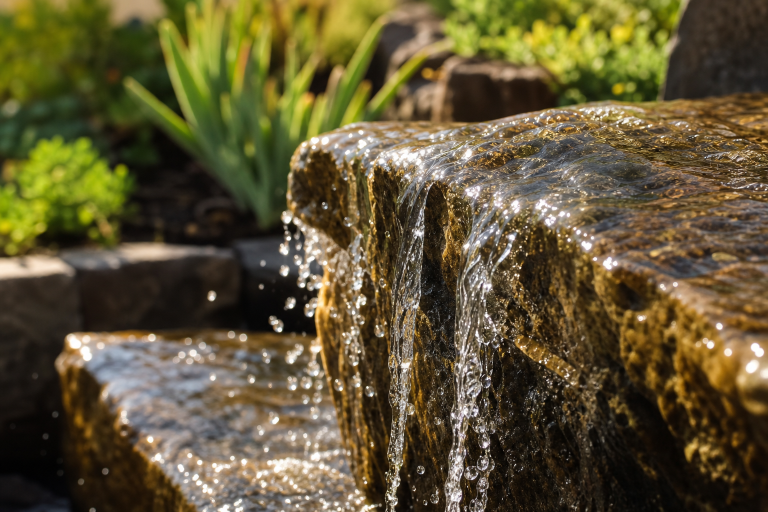
Connect The Feature To The Rest Of The Yard
A feature should belong to the whole landscape, not appear as an isolated object. Set seating where people can hear moving water without narrowing a walkway. Use gravel, natural stone, timber, and earth-toned finishes that suit Livermore’s Mediterranean and rural influences. Soften hard edges with planting. For example, a compact fountain can anchor a patio corner, while a planted pond may work best along the edge of a shaded garden rather than in the middle of open lawn.
Plan For Water Use, Drainage, And Maintenance
Water-wise design extends beyond plant selection. Select efficient pumps, accessible filters, automatic shutoff controls, and leaf screens or skimmers appropriate for the setting. Use drip irrigation where possible, replenish the mulch, and establish an overflow route to direct excess water away from structures. The EPA notes that rainwater capture and infiltration-based landscape practices can support drought preparation by reducing supplemental watering needs and helping manage runoff. Decorative water should never substitute for engineered drainage. A pond can be part of a carefully planned landscape, but persistent standing water, erosion, or complicated grading may require evaluation by a qualified drainage or landscape professional.
Consider Neighborhood Character And Community Fit
Scale matters. In established neighborhoods with smaller lots, consider fence lines, mature roots, pets, children, privacy, and evening noise before selecting a waterfall or pond. On larger South Livermore properties, a feature can frame an open view without dominating it. Before excavation, confirm utility locations, homeowner association rules if applicable, drainage implications, and current local requirements for electrical work, plumbing, or construction.
Use This Simple Planning Checklist
- Measure the usable space and keep access routes clear.
- Mark sun, shade, wind, slope, and runoff patterns.
- Set a budget for installation, electricity, water, and ongoing care.
- Choose plants suited to the site rather than a single visual trend.
- Select a feature that matches the yard’s size and intended use.
- Plan access to pumps, filters, outlets, and controls.
- Ask for a realistic maintenance schedule before work begins.
Common Questions From Livermore Homeowners
Does a water feature waste water?
Not necessarily. Loss depends on evaporation, splash, leaks, exposed surface area, and maintenance. Recirculation, shade, proper placement, and regular inspections can reduce unnecessary loss.
Are native plants required?
No. Native plants are not the only suitable choice, but they can be highly effective when matched to local soil, sun, and water conditions.
What works better in a small yard, a pond, or a pondless waterfall?
A pondless waterfall often requires less open space and may be easier for active households. A pond offers more opportunity for fish, aquatic plants, and wildlife, but needs more dedicated care.
How often should a feature be maintained?
Most systems need routine debris removal, water-level checks, pump and filter care, plant trimming, and seasonal cleanouts. Larger ponds benefit from a written maintenance plan.
Create A Retreat That Lasts
A beautiful Livermore backyard does not have to demand excessive water. The strongest designs balance shade, plants, stone, circulation, drainage, and everyday use. Start with the property’s realities, then choose materials and features that provide comfort, reflect local character, and remain manageable for years to come.
Conclusion
A successful Livermore backyard retreat should balance beauty, comfort, water efficiency, and practicality. By working with the property’s natural conditions and choosing durable plants, thoughtful water features, efficient irrigation systems, and manageable maintenance requirements, homeowners can create an outdoor space that remains enjoyable for years. Careful planning can also help reduce unnecessary water use, improve drainage, provide shade, and make the yard more comfortable during Livermore’s warm and dry seasons. Seating areas, pathways, landscaping, and water features should work together rather than compete for attention. Homeowners should also consider future maintenance, utility access, safety, and the long-term costs of pumps, irrigation, and plant care before construction begins. The best designs are not simply attractive; they fit the landscape, complement the property’s character, and support how the household actually lives and spends time outdoors.


