How digital tools are shaping the future of recruitment

Key takeaways:
- Artificial Intelligence (AI) and automation are revolutionizing recruitment by enhancing efficiency and reducing bias.
- Social media platforms have become essential for engaging and attracting top talent.
- Mobile-friendly recruitment strategies are crucial in today’s job market.
- Data analytics provide valuable insights for informed hiring decisions.
- Digital tools streamline onboarding and improve the candidate experience.
Table of contents:
- AI and Automation in Recruitment
- Leveraging Social Media for Talent Acquisition
- The Rise of Mobile Recruiting
- Data-Driven Hiring Decisions
- Enhancing Onboarding with Digital Tools
- Challenges and Considerations
- Future Trends in Digital Recruitment
- Conclusion
Recruitment is undergoing a digital transformation, with organizations increasingly leveraging advanced technologies to streamline and optimize every stage of the hiring process. Digital solutions like people analytics software empower HR teams to gain data-driven insights, improve candidate matching, and deliver a more engaging experience for applicants.
As companies compete in a tighter labor market and adapt to shifting candidate expectations, integrating digital tools is no longer optional—it’s essential. These tools save time, reduce administrative burdens, help minimize unconscious bias, and create a fairer hiring landscape. With investments in recruitment technology on the rise, organizations that harness these solutions such as Frejun communication platform features are positioned to secure top-tier talent and maintain a competitive edge.
The increasing reliance on technology doesn’t mean that cost is always a barrier. Organizations can now access affordable people analytics platforms, making it easier for businesses of every size to implement data-driven decision-making in their recruitment strategies.
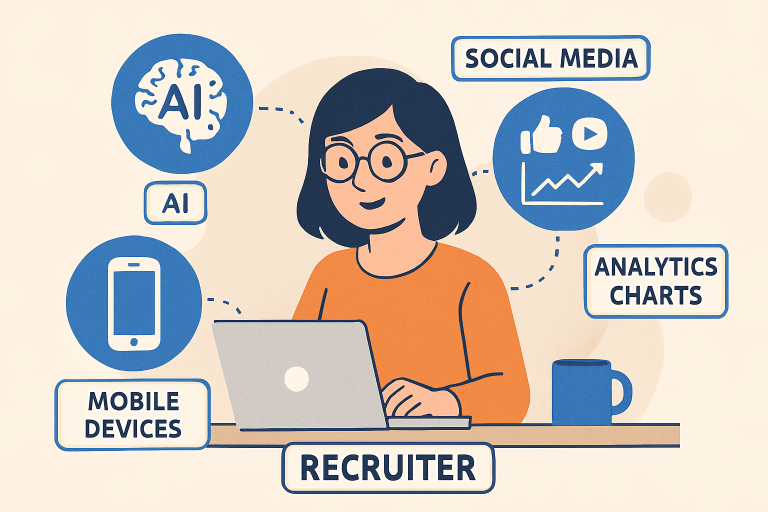
AI and automation in recruitment
Artificial Intelligence has rapidly become integral to modern recruitment. AI-driven platforms scan and analyze resumes in seconds, highlighting candidates whose skills and experiences align most closely with job requirements.
These platforms can even learn from previous hiring outcomes to refine their recommendations, helping recruiters focus on the best-fit applicants. Automation further streamlines repetitive tasks like scheduling interviews and sending follow-up emails, freeing HR professionals to focus on relationship-building and strategic planning.
Importantly, AI can reduce bias by evaluating objective candidate information, although ongoing vigilance is needed to ensure fairness in algorithm design and application. Forbes reports underscore how organizations using AI in recruitment see improved efficiency and more equitable candidate evaluations, but they also highlight the need for transparency and continuous monitoring.
Leveraging social media for talent acquisition
Social media has evolved into a vital recruitment channel, allowing companies to reach passive talent and showcase their employer brand. LinkedIn, Twitter, Facebook, and even niche platforms like GitHub and Behance enable recruiters to connect with a diverse range of candidates while sharing authentic insights into company culture. Interactive posts, employee testimonials, and day-in-the-life videos can amplify employer branding efforts, while targeted advertising allows for precision in attracting desired skill sets.
Social media engagement is about more than communication; it’s about community. As Harvard Business Review highlights, by fostering authentic dialogue, companies can create a talent pool of engaged prospects who are more likely to convert to applicants when opportunities arise.
The rise of mobile recruiting
As mobile devices become ubiquitous, mobile-first recruitment strategies are no longer optional. Modern job seekers expect to browse postings, submit applications, and even participate in assessments directly from their phones. Companies have responded with mobile-optimized career pages and application portals that simplify the process, reducing friction and abandonment rates.
Mobile communication tools, including SMS and dedicated recruitment apps, make it easier for candidates to interact with recruiters and stay updated on their application status. This increased accessibility can significantly expand the reach and diversity of the applicant pool, ensuring organizations do not miss out on high-potential talent due to technical barriers.
Data-driven hiring decisions
Data analytics are revolutionizing recruitment by providing real-time insight into every process step. With dashboards tracking metrics such as time-to-hire, source effectiveness, and drop-off points, organizations can quickly identify bottlenecks and refine their approaches. Predictive analytics empowers companies to plan proactively for talent needs, anticipate turnover, and develop targeted sourcing strategies.
Comprehensive use of data in recruitment, especially when powered by robust people analytics software, goes beyond simple process improvement—it enables HR teams to align hiring with broader business goals and demonstrate tangible ROI from talent acquisition investments.
Enhancing onboarding with digital tools
An employee’s onboarding experience can set the tone for their entire tenure. Digital onboarding solutions offer self-service portals, interactive e-learning, and virtual introductions that accelerate integration for new hires. This approach streamlines paperwork, reduces manual errors, and creatively introduces company values.
Tools like gamified assessments, interactive training sessions, and real-time feedback help new employees feel welcome and engaged from day one. Organizations leveraging digital onboarding have seen improved retention and faster ramp-up to productivity, providing a clear competitive advantage.
Challenges and considerations
Although digital recruitment tools offer transformative benefits, they introduce new complexities. Data privacy and cybersecurity become paramount, as sensitive personal information is stored and transferred online. Organizations must balance technological automation with the human touch, ensuring candidates feel valued and respected.
Additionally, companies must routinely assess AI algorithms for fairness, seeking to eliminate inadvertent bias and promote transparency in decision-making. Ongoing training and evaluation are essential to ensure digital tools reflect the organization’s commitment to fair hiring practices.
Future trends in digital recruitment
The future of recruitment will see further integration of cutting-edge technologies. Machine learning and AI will play greater roles in proactive talent mapping and predictive workforce planning. Blockchain-backed credentialing may accelerate background checks and skills verification, while virtual reality could transform candidate assessments with immersive, job-specific simulations.
As remote work and the gig economy expand, organizations must adopt adaptable, flexible talent acquisition strategies. Increasing focus on diversity and inclusion will likely drive continued innovation in digital recruitment tools, with data-driven solutions designed to level the playing field and foster equitable opportunity.
Improve candidate and employer experience
Digital tools fundamentally reshape recruitment, bringing greater efficiency, data-driven insight, and fairness to the hiring process.
By embracing AI, social media, mobile-first design, and analytics, organizations can improve candidate and employer experience and ultimately secure the best people for their teams. Success in the modern talent marketplace depends on continuously balancing technology with ethical considerations and maintaining the irreplaceable human connections that define effective recruitment.