How Charlotte, North Carolina homeowners can plan low-maintenance water features for local weather

Key Takeaways
- Pondless waterfalls add sound and movement without the footprint of a large open pond.
- Drainage, sunlight, tree roots, utilities, and maintenance access should guide placement.
- Recirculating systems still need planning for evaporation, splash, leaks, and stormwater overflow.
- Stable stone, suitable plants, protected electrical connections, and clear paths support everyday use.
- Written estimates and realistic maintenance expectations help match the feature to the yard and budget.
A quiet stream beside a patio can make a Charlotte, North Carolina backyard feel more restorative without requiring the footprint of a pool or a large garden pond. For homeowners considering pondless waterfalls in Charlotte, Charlotte Backyard Ponds offers design and installation services focused on recirculating waterfalls and streams for Charlotte and surrounding communities. Its service page is especially relevant for homeowners comparing feature size, stonework, circulation, and layout that suits how their yard is used.
Charlotte yards can present several planning challenges at once. Summer heat, strong rainstorms, shade from mature trees, compacted soil, and periodic dry conditions all affect outdoor features. The most successful water feature is not simply placed in open space. It is designed around drainage, sun exposure, access, and the homeowner’s realistic maintenance routine.
Why Smaller Water Features Often Work Well in Charlotte
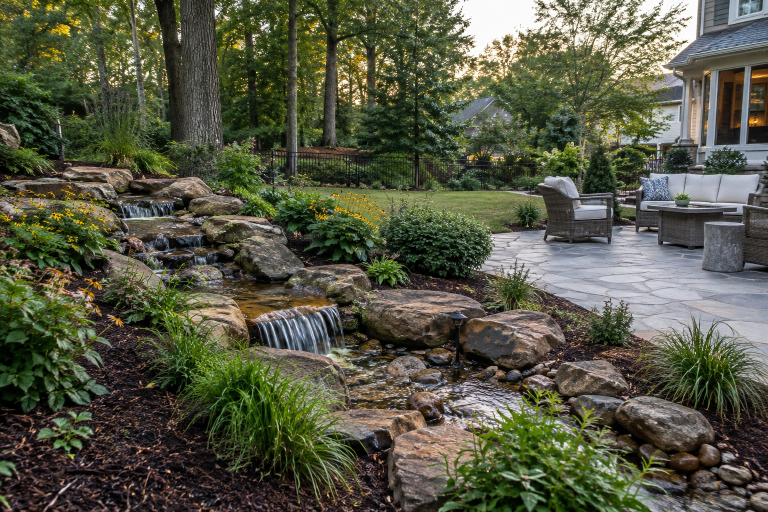
A compact pondless waterfall or stream can create sound, movement, and visual interest without introducing a large area of open water. Water disappears into a buried reservoir before being pumped back to the top of the feature. This recirculating approach can fit beside a deck, along a fence line, near a garden seating area, or within a planted border.
That flexibility matters in neighborhoods with smaller lots, such as Plaza Midwood, NoDa, and South End, as well as in larger outdoor living areas around Ballantyne, Matthews, and nearby communities. A feature does not need to be long or elaborate to become a focal point. A short cascade with natural stone and thoughtful planting can give a patio a stronger sense of enclosure and calm.
Match the Design to the Yard
Before selecting stone or a pump, spend time observing the property. Watch where water travels during a hard rain. Notice which areas remain soggy, where tree roots surface, and which locations receive direct afternoon sun. Water from the feature should never be allowed to drain toward a foundation, crawl space, sidewalk, or neighboring property.
Start with a practical site review
- Watch how rain moves through the yard and identify low spots.
- Mark underground utilities before any digging begins.
- Choose a location visible from a patio, deck, window, or seating area.
- Leave room for planting, stone placement, and future pump access.
- Plan protected electrical connections and a stable walking surface.
Plan for Rainy Weeks and Dry Spells
Charlotte landscapes may experience periods of substantial rain followed by stretches when plants need more support. A pondless system recirculates a contained supply of water rather than running continuously from a fresh municipal source. Still, evaporation, splash, leaks, and stormwater overflow should be part of the plan.
< >
Planting around the feature can reduce bare soil and help the design blend into the yard. North Carolina’s water-wise landscaping guidancerecommends matching plants to their growing conditions, using mulch to retain moisture, and applying efficient irrigation where it is needed. These principles are useful around a water feature, particularly where sunny stone borders meet drier planting beds.
Mulch and appropriately placed plants belong around the feature, not in its reservoir or pump area. Keep soil, leaf litter, and loose mulch from washing into the system during storms. It is also wise to check local water-use guidance before filling or topping off any decorative feature during unusually dry conditions.
Choose Materials That Suit Local Conditions
Stone, gravel, liner, edging, and plants should work together. Natural stone can make a waterfall look established, but every boulder needs a stable base. Dark stone in direct sun may become hot, while smooth or wet surfaces can be slippery near paths. Use distinct walking routes instead of asking guests to step across wet rock.
- Use stable stone that is unlikely to shift after heavy rain.
- Keep pump access simple for cleaning and repairs.
- Choose plants for the actual sun, shade, and moisture conditions.
- Use lighting selectively for a calm evening effect.
- Direct overflow routes away from structures and property lines.
Regionally suitable plants can also reduce upkeep. Plants with strong root systems may help hold soil in place near slopes, while shade-tolerant choices can work under mature trees. Avoid crowding the stream edge with plants that quickly drop heavy debris into the water.
Understand the Maintenance Before Building
Basic care is straightforward when access has been planned from the beginning. Homeowners should remove leaves and twigs, check the water level, clean pump screens as needed, trim nearby growth, and inspect visible stone after major storms. A sudden drop in water level may point to splash, a leak, or a problem with circulation.
Seasonal checks also protect the liner, surrounding hardscape, and planting beds. Fall leaf drop can increase cleaning needs, while spring is a useful time to check whether winter weather shifted stone or exposed edges. A feature that is easy to reach is more likely to receive the attention it needs.
Safety, Neighbors, and Cost Planning
A pondless feature avoids the deep open water found in many traditional ponds, but it still deserves care around children and pets. Use slip-resistant paths, protected electrical connections, and controls that are accessible without becoming visually distracting. Consider the sound level as well. A stronger waterfall may be pleasant near a patio but disruptive near a bedroom window or shared fence.
Before construction, confirm HOA rules, local requirements, and any property-line considerations. Costs vary based on the feature’s length and width, the amount of stone, excavation, grading, electrical work, lighting, planting, equipment access, and future service needs. Compare written estimates that clearly describe materials, drainage, cleanup, warranties, and maintenance expectations.
Design for the Yard You Have
The best Charlotte water feature is not always the largest one. It should fit the property, handle changing weather, remain easy to care for, and create a place where people want to pause. Study the yard after rain, decide how much routine maintenance is realistic, and build the design around how the outdoor space will actually be enjoyed.