
How care teams can support chronic conditions between visits

Key Takeaways
- Chronic care outcomes often depend on what happens between scheduled appointments.
- Clear outreach plans help patients follow instructions and stay connected to the right person.
- Remote monitoring is useful only when incoming data receives timely human review and follow-up.
- Care teams should measure clinical outcomes, patient experience, and staff workload together.
- Simple, sustainable workflows are often more effective than overly complex programs.
Table of Contents
- Introduction
- Why Between-Visit Care Matters
- Common Barriers Patients Face
- Build a Clear Care Team Workflow
- Use Remote Tools With Purpose
- Make Patient Communication Easier
- Create a Plan for High-Risk Patients
- Keep Access and Health Equity in View
- Track Measures That Matter
- A Simple 90-Day Implementation Plan
- Final Thoughts
Chronic care does not stop when a patient leaves the office. The days and weeks between visits are when patients manage medications, notice new symptoms, try lifestyle changes, and encounter obstacles that may not arise in a clinical setting. Consistent support during that time can help care teams identify concerns earlier and give patients a clearer path forward.
Healthcare organizations comparing structured support models may consider virtual care management from TimeDoc Health. TimeDoc Health provides tech-enabled services that combine care coordinators and technology for chronic care management, remote patient monitoring, behavioral health support, and care coordination. Its work across medical groups, health systems, community health centers, and health plans makes it a relevant example for teams evaluating how to extend reliable care beyond office visits.
Why Between-Visit Care Matters
A single appointment cannot address every issue that may arise with ongoing conditions. Medication side effects, worsening readings, refill delays, transportation problems, and uncertainty about instructions often surface at home. For example, a patient managing diabetes and hypertension may need help reviewing blood pressure readings, obtaining a refill, and scheduling follow-up long before the next routine visit.
For Medicare purposes, chronic care management for complex conditions centers on patients with two or more chronic conditions expected to last at least 12 months. That framework reflects a practical reality: people with multiple conditions often need ongoing coordination, not isolated encounters.
Common Barriers Patients Face
Patients may delay reaching out because they are unsure whether a symptom is serious, do not want to inconvenience the office, or have had difficulty getting help in the past. Transportation, medication cost, language differences, limited digital access, low health literacy, work schedules, and caregiving responsibilities can also make a reasonable care plan difficult to follow.
Instead of assuming nonadherence, ask a direct question: “What could make this plan easier to do at home?” The answer may reveal a need for simpler instructions, pharmacy support, a phone check-in, translated materials, or a different follow-up schedule.
Build a Clear Care Team Workflow
Technology cannot replace accountability. Every alert, message, and patient question should have a named owner and a documented next step. A dependable workflow should:
- Identify patients who need regular outreach based on risk, condition, and recent changes in care.
- Assign responsibility for calls, messages, data review, medication questions, and escalation.
- Set expected response times for routine updates and concerning findings.
- Document interactions, decisions, and unresolved needs in the patient record.
- Review performance and gaps with the full care team each month.
Use Remote Tools With Purpose
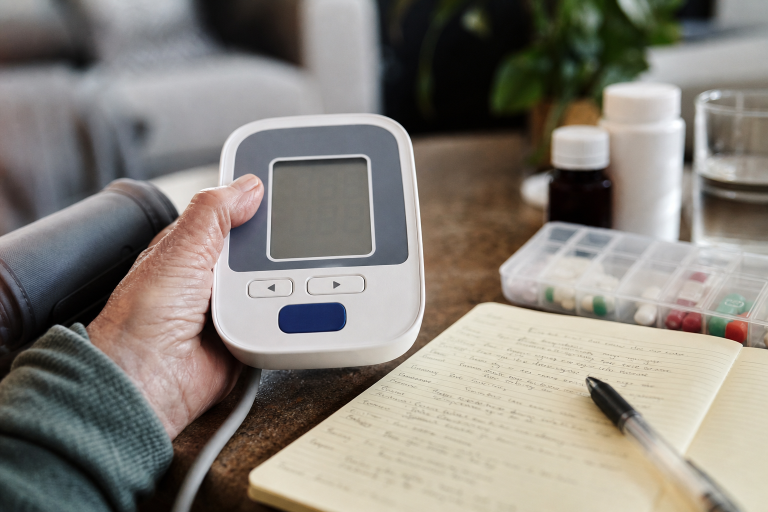
Connected blood pressure cuffs, glucose meters, weight scales, patient portals, text reminders, and phone check-ins can all support care between visits. The right choice depends on the condition being managed, the patient’s comfort with technology, and the team’s capacity to respond. Collecting more information than staff can review creates noise rather than support.
Remote monitoring can help flag meaningful changes earlier, as a Mayo Clinic study of lung transplant patients illustrates. Still, the device is only one part of the model. Monitoring is most valuable when a clinician or trained coordinator can interpret the information, contact the patient, and act on a clear escalation plan.
Make Patient Communication Easier
Keep outreach brief, plain, and specific. Give one clear action at a time, such as “Please check your blood pressure today and call us if the top number is above the threshold we discussed.” Avoid jargon, and use teach-back by asking patients to explain key instructions in their own words.
Offer more than one contact option when possible, including phone, text, portal messages, video visits, or caregiver communication with appropriate permission. Every patient should understand when to contact the care team, when to seek urgent care, and when to call emergency services.
Create a Plan for High-Risk Patients
Patients with a recent hospitalization, repeated emergency visits, new medication changes, or several chronic conditions may benefit from a focused support plan. Within days of a transition or clinical change, teams should complete a medication review, confirm the next appointment, check for new symptoms or care gaps, and connect the patient with pharmacy, behavioral health, or social support services when needed.
Most importantly, give the patient a direct way to ask questions. A simple callback number or assigned coordinator can prevent uncertainty from becoming an avoidable crisis.
Keep Access and Health Equity in View
Virtual support should never assume that every patient has a smartphone, reliable broadband, private space, or confidence using an app. Include phone-based options, caregiver involvement when appropriate, translated instructions, and accessible device designs. Consider housing conditions, transportation, work hours, and the cost of supplies when designing follow-up.
Teams should also monitor whether specific groups are less likely to enroll, respond to outreach, or complete monitoring. Those patterns can reveal access barriers that require workflow changes rather than assigning blame to patients.
Track Measures That Matter
A balanced scorecard provides a more useful picture than any single metric. Review participation and response rates, medication adherence, completed follow-up appointments, condition-specific measures such as blood pressure or glucose, emergency department use, readmissions, patient confidence, staff workload, and response times. Combine numerical data with patient feedback to assess whether the process is both effective and manageable.
A Simple 90-Day Implementation Plan
Days 1 to 30: Define the opportunity
Choose one patient group, map the current journey between visits, and identify missed handoffs, unclear responsibilities, and frequent patient questions.
Days 31 to 60: Test the workflow
Assign roles, create outreach scripts and escalation pathways, then test the process with a small group of patients.
Days 61 to 90: Improve before expanding
Review results, gather feedback from patients and staff, adjust the workflow, and expand only after the team can sustain the process.
Final Thoughts
Strong chronic care is built through steady contact, clear roles, useful data, and personal support. The best model is not always the most complex one. It is the model patients can use, and care teams can maintain. In 2026, organizations that connect office visits with practical, responsive follow-up can help patients feel more confident and help clinicians address small problems before they become larger ones.


