
How AI is transforming medical documentation review

Key takeaways
- AI reduces the time clinicians spend on documentation, resulting in more time for patient care.
- AI-powered tools improve the accuracy and consistency of medical records, minimizing errors and omissions.
- Healthcare facilities benefit from cost savings through streamlined processes and decreased administrative overhead.
Table of contents
- Introduction
- The Burden of Medical Documentation
- AI Solutions in Medical Documentation
- Benefits of AI Integration
- Challenges and Considerations
- Future Outlook
- Conclusion
Artificial Intelligence (AI) is dramatically changing how the healthcare industry approaches medical documentation review. As the reliance on electronic health records grows, AI is stepping in to automate administrative tasks that have traditionally burdened clinicians. In addition to enhancing clinical workflows, AI technology has broad-reaching implications, supporting everything from improved patient care to medical summaries for law firms.
By streamlining the process of creating and reviewing medical records, AI helps to address persistent problems with documentation accuracy and resource allocation. When clinicians spend less time on paperwork, they can devote more time to direct patient care, ultimately improving health outcomes. As a result, AI is quickly becoming an essential component in both everyday medical practice and specialized legal-medical collaborations.
It is not just healthcare providers who benefit. Legal professionals who rely on accurate, succinct medical summaries find value in AI-powered solutions that support case preparation, insurance claims, and litigation. In this way, AI’s role in transforming documentation review transcends individual sectors and drives progress across the healthcare and legal industries.
The shift to AI-powered documentation presents both remarkable opportunities and new challenges. Healthcare organizations and their partners must understand the landscape of AI solutions and prepare for the evolving future of medical documentation review. Thoughtful adoption and effective integration can deliver transformative improvements for all stakeholders.
Introduction
Medical documentation lies at the core of healthcare delivery, serving as the backbone of patient records and the means for sharing information between providers. Proper documentation directly impacts care coordination, legal compliance, and patient safety. Yet, traditional documentation processes can be frustratingly slow, susceptible to human error, and a major source of clinician fatigue. In today’s fast-paced medical environment, the call to automate such processes has never been stronger.
The burden of medical documentation
Documentation occupies a significant portion of healthcare professionals’ workdays. Research has shown that clinicians spend as much as 55 percent of their workday on medical records, much of it outside of face-to-face patient time. This administrative demand contributes to widespread burnout, exhaustion, and lower job satisfaction among physicians and nurses. As the paperwork piles up, the risk of incomplete or inaccurate records increases, potentially jeopardizing patient safety and clinical outcomes.
The impact is felt beyond hospitals and clinics. Accurate documentation is vital to the success of insurance claims and legal proceedings; incomplete or unclear records can result in denied claims or lost cases. For legal professionals and insurers alike, the cost of inadequate documentation can be substantial, emphasizing the value of robust, streamlined review processes.
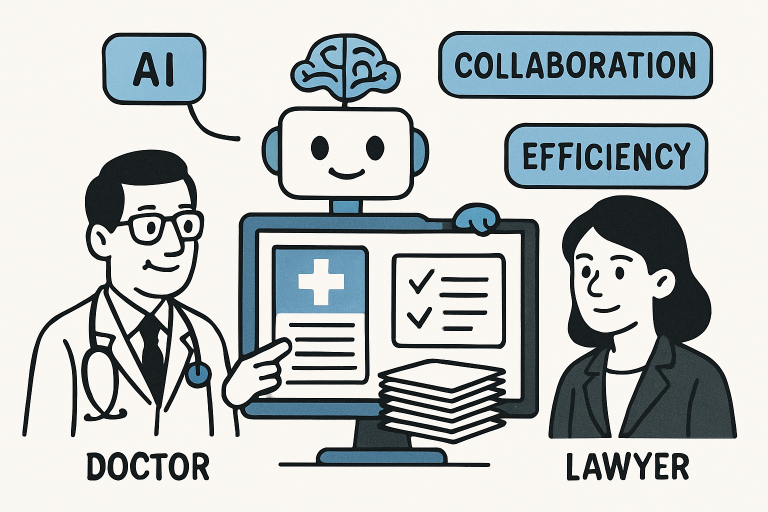
AI Solutions in medical documentation
AI solutions are rapidly gaining ground in medical documentation. One of the most notable innovations is the use of ambient clinical intelligence (ACI) systems that listen to doctor-patient conversations and automatically generate complete and structured clinical notes. These technologies leverage natural language processing and machine learning to capture details accurately and efficiently. Medical transcription powered by AI further streamlines documentation, reducing the risk of manual entry errors and saving clinicians precious time.
Leading AI systems can integrate with popular electronic health record (EHR) platforms, enabling seamless updates and real-time synchronization. These capabilities ensure that records are up to date and accessible, fostering better communication among care teams and reducing redundant paperwork. As AI-powered solutions continue to evolve, their ability to comprehend medical jargon and context is also improving, making them invaluable across a range of specialties.
Benefits of AI integration
- Time Efficiency: AI can expedite documentation tasks by up to 42 percent, freeing clinicians for more meaningful patient interactions and reducing after-hours charting.
- Improved Accuracy: AI systems not only standardize medical records but also help eliminate common human errors, resulting in more thorough and reliable documentation.
- Cost Savings: Streamlining documentation processes helps institutions reduce labor costs and improve operational efficiency. Savings in time and administration can be redirected toward patient-centered activities.
Beyond clinical environments, these benefits extend to legal and insurance sectors, where precise documentation underpins fair decisions and expedient case resolution. Valuable insights into the broad adoption of AI in healthcare can be found in recent analyses by respected sources such as Forbes.
Challenges and considerations
- Data Privacy: Protecting patient privacy is essential. AI tools must comply with stringent regulations and deploy strong security measures to maintain data confidentiality.
- System Accuracy and Trust: While AI can reduce some errors, rigorous validation and oversight remain necessary to ensure that the technology does not introduce new errors.
- Integration and Adoption: Seamless integration with existing electronic health records is crucial. Effective training for clinical and administrative staff fosters trust and a smooth transition.
Healthcare leaders must balance AI’s promise against these challenges, cultivating partnerships with reputable technology providers and fostering an organizational culture of adaptability and compliance.
Future outlook
As AI technologies advance, the scope of automated documentation will continue to expand. Developers are focused on refining natural language processing, improving contextual understanding, and enhancing system interoperability. The vision for the future is a healthcare ecosystem where data flows intuitively, paperwork is minimized, and clinicians are empowered to focus on patient care. Adoption of these innovations may even set new standards for medical recordkeeping and legal documentation practices across industries.
The forefront of innovation and quality care
AI is revolutionizing medical documentation review, making healthcare more efficient, precise, and patient-centered. While challenges related to privacy, accuracy, and integration remain, the potential for lasting positive impact on both providers and patients is significant. By embracing these transformative technologies, healthcare professionals, legal experts, and institutions position themselves at the forefront of innovation and quality care.


