From gold to ceramics: How dental materials have changed through the decades

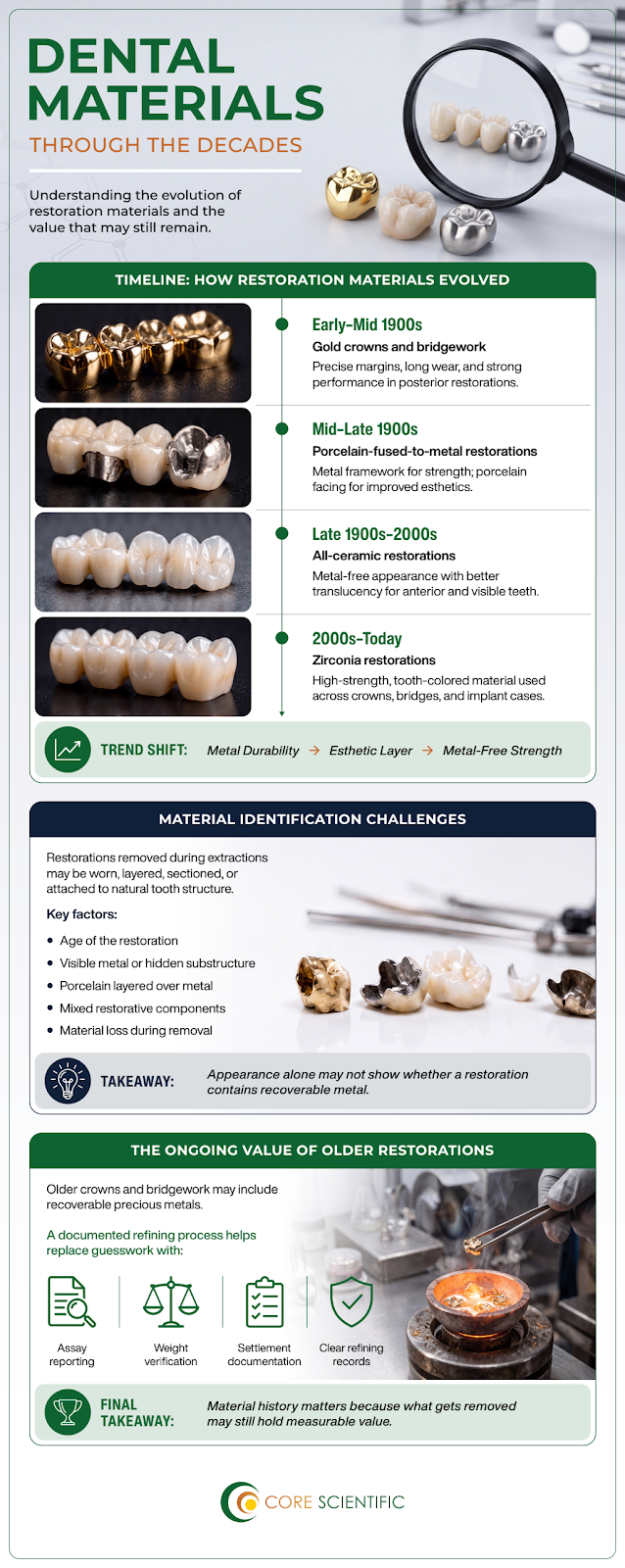
Dental materials have changed considerably over the past century. Early restorations prioritized durability, while modern dentistry also considers appearance, biocompatibility, and tooth preservation. Examining these developments reveals how advances in materials science have improved dental treatment options.
Early Dentistry: Gold and Amalgam
During the early twentieth century, gold was widely used for crowns, inlays, and bridges because of its durability and resistance to corrosion. Silver-colored dental amalgam, containing mercury combined with other metals, became a common material for filling cavities. Gold restorations were expensive but could last decades with proper care. Amalgam offered an affordable alternative, particularly for back teeth.
Midcentury Advances: Acrylics and Porcelain
During the 1950s and 1960s, acrylic resins became important materials for dentures and temporary restorations. Their lighter weight and relatively low production costs made removable prosthetics more accessible.
Porcelain-fused-to-metal crowns also gained popularity. These restorations combined a metal framework for strength with a tooth-colored porcelain exterior, improving appearance compared with traditional metal crowns.
Modern Dentistry: Composites and Ceramics
From the late twentieth century onward, tooth-colored composite resins became increasingly common for fillings. Improvements in bonding techniques allowed dentists to preserve more natural tooth structure.
Modern ceramic materials, including zirconia and lithium disilicate, offer additional options for crowns and other restorations. Their selection depends on factors such as tooth location, bite forces, and clinical requirements.
What Happens to Older Dental Metals?
Replacing older restorations sometimes generates recoverable precious metal scrap. Dental laboratories and specialized refiners can process eligible materials, although composition and value vary.
Some businesses providing refining for jewelers and pawnshops also handle dental alloys containing gold, palladium, or other valuable metals. Proper handling and material identification remain important.
Dental materials continue to improve through research into strength, appearance, and long-term performance. Each generation has introduced options that address limitations of earlier treatments. Check out the infographic below to learn more.