
Community revitalization through capital improvements: Strategies, funding, and real-world examples

Key takeaways
- Capital improvements are essential for community revitalization, enhancing infrastructure, housing, and public spaces.
- Successful projects often involve public-private partnerships and community engagement.
- Funding sources include federal grants, state programs, and local initiatives.
- Real-life examples demonstrate the transformative impact of capital improvements on communities.
Table of contents
- Introduction
- Understanding Capital Improvements
- Funding Sources for Capital Improvements
- Successful Examples of Community Revitalization
- Challenges and Solutions in Implementing Capital Improvements
- The Role of Community Engagement
- Future Trends in Community Revitalization
- Conclusion
Introduction
Revitalizing communities is increasingly a priority for local governments and urban planners seeking to provide better environments and improved quality of life for residents. Through thoughtful investment in capital improvements Seattle and across the United States, neighborhoods are experiencing significant positive transformations. These efforts focus on modernizing public infrastructure, upgrading housing, and creating vibrant public spaces that benefit existing residents and attract new businesses and long-term investment.
Strategic capital improvements stimulate economic activity, support social connectivity, and provide safer, more attractive community assets. They are considered an indispensable tool for anyone aiming to drive meaningful neighborhood change. Communities that embrace well-managed capital projects find themselves better equipped for future growth and resilience, laying the groundwork for sustained prosperity.
By investing in physical assets like roads, parks, and publicly owned facilities, local governments can promote a sense of pride and foster social cohesion. These forward-thinking initiatives make cities and towns more livable and appealing in an increasingly competitive landscape.
Critical to this process is the identification and securing of robust funding sources, effective stakeholder engagement, and thoughtful implementation strategies. Without these, even the most well-intentioned improvement efforts can stall or fall short of expectations.
Understanding capital improvements
Capital improvements refer to major investments in long-lasting physical assets such as roads, bridges, public parks, and government buildings. These projects go beyond routine maintenance, aiming to significantly enhance the value, functionality, and appearance of a community’s infrastructure. When executed effectively, capital improvements boost property values, attract private investors, and stimulate broader economic development.
Typically, these investments are planned and budgeted over multiple years, requiring comprehensive feasibility studies and community input. Beyond their monetary value, well-designed capital projects can address important quality-of-life concerns, such as improving traffic flow, reducing pollution, or creating inclusive public gathering spaces.
Funding sources for capital improvements
Despite the high return on investment, obtaining the necessary funds to launch capital improvement projects can be a significant challenge. Fortunately, there is a range of options available:
- Federal Grants: Large-scale grants, such as those from the U.S. Department of Housing and Urban Development (HUD), are crucial for many revitalization initiatives. The Choice Neighborhoods Initiative, for example, has directed substantial federal money into communities for comprehensive neighborhood transformation projects.
- State Programs: Most states support local infrastructure efforts through targeted grants and loan programs. A prominent example is New York’s Restore NY Communities Initiative, which awarded more than $50 million to 50 separate projects to address blighted structures and promote economic renewal.
- Local Initiatives: At the municipal level, mechanisms like tax increment financing (TIF) enable cities to leverage future property tax increases resulting from revitalization to pay for project costs today.
Securing a mix of funding sources is key, as it enables larger, more ambitious projects while spreading financial risk and encouraging partnerships.
Successful examples of community revitalization
Across the country, numerous cities have demonstrated the potential for capital improvements to create lasting positive transformation:
- Detroit, Michigan: The Detroit Riverfront Conservancy successfully rallied public and private support to raise over $23 million for revitalizing and maintaining the city’s waterfront. The result is a modern, accessible public space recognized as a key driver of economic and cultural activity along the river.
- Akron, Ohio: Through the Innerbelt Master Plan, Akron has taken on the ambitious task of transforming a decommissioned freeway into a new community asset. This project, focused on reconnecting long-divided neighborhoods and fostering economic activity, is seen as a template for cities nationwide.
- Baltimore, Maryland: The federal government allocated over $85 million to the redevelopment of Baltimore’s “Highway to Nowhere,” an iconic project aimed at reuniting communities and revitalizing the local economy.
Challenges and solutions in implementing capital improvements
Despite significant benefits, capital improvement projects routinely face obstacles such as funding shortages, logistical hurdles, and community resistance. Addressing these challenges involves several critical strategies:
- Public-Private Partnerships: Collaborating with private entities can help supplement limited public funds and bring technical expertise to large projects.
- Transparent Planning: Open communication and early stakeholder engagement build trust, increase community buy-in, and help avoid costly disputes or project delays.
- Phased Implementation: Breaking projects into manageable phases provides greater flexibility, allowing adjustments as circumstances evolve and reducing the risk of budget overruns.
The role of community engagement
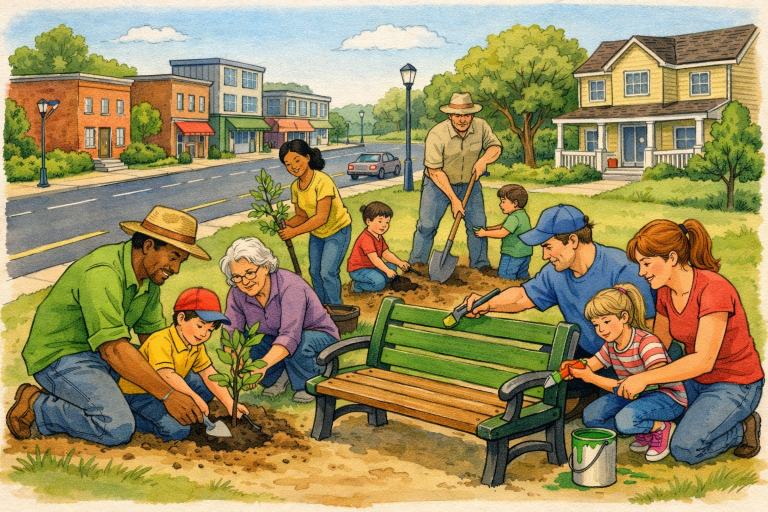
Community engagement is a cornerstone of successful capital improvement efforts. By involving residents throughout the planning and execution process, municipalities can ensure the projects address real needs and generate enthusiasm for long-term stewardship. Engaged communities are more likely to actively use, maintain, and advocate for upgraded public amenities, strengthening the social fabric and creating a virtuous cycle of investment and improvement. Guidance on building inclusive engagement can be found through organizations such as The Urban Institute.
Future trends in community revitalization
Looking ahead, several trends are shaping the way cities approach capital improvements:
- Sustainable Development: Projects increasingly incorporate green infrastructure, such as permeable pavements and energy-efficient public buildings.
- Smart Cities: Cities are utilizing advanced technology solutions, including digital monitoring systems and integrated service platforms, to optimize urban systems and improve the quality of life.
- Inclusive Planning: The focus is shifting toward projects that address social equity, ensuring benefits are distributed to all residents rather than isolated neighborhoods.
Conclusion
Capital improvements remain an essential pathway for revitalizing America’s communities. Through careful planning, strategic funding, and robust community involvement, these projects can transform decaying neighborhoods into thriving engines of growth and well-being. As cities embrace new technology and prioritize equitable development, future capital initiatives will continue to drive positive change and build stronger, more resilient communities for generations to come.


