
Best practices for durable garage flooring: Selection, installation, and maintenance

Table of contents
- Understanding Garage Flooring Needs
- Top Durable Garage Flooring Options
- Preparation and Installation Tips
- Maintenance for Longevity
- Cost Considerations
- Conclusion
Choosing the right flooring for your garage is crucial for ensuring both longevity and functionality. A well-selected surface can withstand everyday wear and tear, resist chemical spills, and handle significant weight from vehicles and equipment. Whether you use your space for parking, a workshop, or a home gym, investing in the right flooring can maximize your garage’s potential. Get a garage flooring quote for custom recommendations tailored to your project and budget.
Making an informed decision now can save you time and money down the road. The right flooring material can help prevent future damage and costly repairs. Different flooring solutions offer varying degrees of resilience, moisture resistance, and style, so understanding your specific needs can help you make the most practical and attractive choice. This guide walks you through top options, preparation steps, and maintenance strategies to keep your floor in top shape.
Understanding garage flooring needs
Garages today are versatile spaces that accommodate much more than just cars. From serving as hobby zones to doubling as home gyms or storage areas, each use type places unique demands on your floor. When choosing garage flooring, specific needs should be addressed:
- Load Capacity: The floor should reliably support vehicles and heavy machinery without cracking or shifting.
- Chemical Resistance: Automotive fluids, solvents, and household chemicals often spill on garage floors. Choose the right surface to handle these hazards without staining or degrading.
- Moisture Resistance: Water from rain, snow melt, or excess humidity can damage unprotected surroundings and even lead to the growth of mold or mildew.
- Slip Resistance: Safety is essential. A slip-resistant floor helps keep the environment safe, reducing the risk of accidents.
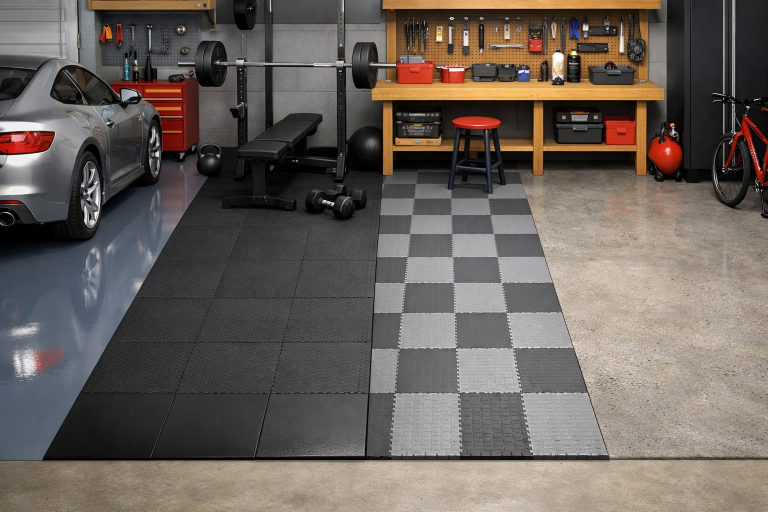
Top durable garage flooring options
There are several materials optimized for garage environments, each with different features, costs, and durability.
Epoxy Coatings
Epoxy coatings, consisting of resin and hardener, create a seamless, glossy, and tough surface once cured. Their popularity comes from exceptional durability against hot tire pickup, stains, and chemical spills. Epoxy is also easy to clean and can be customized with color chips or patterns.
Interlocking Tiles
Interlocking tiles made of PVC or rubber are a flexible solution for DIYers and professionals alike. They snap together over existing concrete and are easy to replace if a section is damaged. In addition to durability, they offer good chemical and moisture resistance, making these tiles suitable for a broad range of activities.
Polished Concrete
Polished concrete involves mechanically grinding and smoothing an existing slab, then sealing it for shine and strength. This choice is highly durable, low maintenance, and customizable with color or texture treatments. Polished concrete is ideal for those seeking an industrial look and long-term longevity under heavy use.
Rubber Flooring
Rubber garage flooring is a top choice for spaces converted into gyms or workshops. It offers excellent shock absorption, sound dampening, and superior stain and mold resistance. Typically sold in tiles or rolls, rubber flooring is easy to clean and comfortable to stand on for prolonged periods.
If you need new garage doors to go with your new look floor, contact a Garage Door Supplier in South Carolina.
Preparation and installation tips
A well-prepared surface is vital to lasting performance. Before laying or coating any flooring material, start with these best practices:
- Surface Preparation: Remove all debris, oils, and stains. Repair cracks and ensure the slab is level to prevent flooring imperfections.
- Moisture Testing: Test concrete for moisture. Excess trapped moisture can impair the adhesion of coatings such as epoxy, leading to blistering or peeling.
- Professional Installation: Some solutions, especially epoxy or polished concrete, benefit from experienced installers. Proper mixing, curing, and finishing impact both appearance and lifespan.
Maintenance for longevity
Maintaining your garage floor boosts its life expectancy and keeps your space clean and safe:
- Cleaning: Sweep or vacuum weekly to remove abrasive dust and debris. Mop surfaces with water and mild detergent as needed.
- Immediate Spill Cleanup: Wipe up oil, fuel, or chemical spills quickly to prevent stains and extend your flooring’s appearance and performance.
- Periodic Inspections: Look for chips, cracks, or color fading. Address minor repairs before they escalate.
Cost considerations
Balancing budget and performance is key in selecting garage flooring. Here is a general breakdown:
- Epoxy Coatings: Moderately priced (especially when professionally installed), they offer excellent value with impressive durability.
- Interlocking Tiles: Costs vary based on material quality. PVC tiles are generally more affordable than premium rubber versions.
- Polished Concrete: Carries a higher upfront cost due to preparation and labor, but offers many years of use with low maintenance expenses.
- Rubber Flooring: Typically more expensive, particularly for thick, commercial-grade materials, but pays dividends if you require superior comfort and resilience.
Conclusion
Carefully choosing your garage flooring is an essential investment in your home’s functionality and long-term value. Each material option has its own advantages, and the best solution depends on your intended use, maintenance preferences, and budget. By planning adequately, investing in quality materials, and maintaining your floor, you will enjoy a durable surface that stands up to all of your garage’s demands.


