
Advanced lightning protection strategies for modern infrastructure

Table of Contents
- Understanding Lightning Risks
- Innovative Lightning Protection Technologies
- Integrated Lightning and Surge Protection
- Lightning Prediction and Prevention
- Lightning Risk Assessment Tools
- Conclusion
Lightning strikes remain a major threat to critical infrastructure worldwide. As cities grow and advanced technologies become commonplace, damage from unpredictable electrical storms can cripple everything from hospitals to communication systems. To address this reality, organizations increasingly rely on advanced lightning protection software and evolving risk management concepts to shield assets and ensure public safety.
Understanding the many facets of lightning risk and leveraging new technologies are essential for keeping infrastructure resilient. Innovations in lightning guidance, prediction, and integrated protection are transforming how we defend vital services, power grids, and buildings from direct strikes and surges. Efforts in places like Japan and Canada highlight the scope of this challenge and the necessity of robust solutions.
With lightning-related damages in Japan reaching nearly 100 to 200 billion yen each year, global infrastructure owners and engineers must prioritize not just repairs, but also mitigation and prevention strategies. Modern advancements in detection and risk assessment are helping cities, utilities, and governments plan for the future with greater confidence.
This article examines the risks posed by lightning, highlights technological progress, and offers best practices for integrating comprehensive lightning and surge protection.
Understanding Lightning Risks
Lightning can damage power systems, disrupt essential services, and result in massive repair costs. For example, the annual losses in Japan emphasize how a single strike can cascade into widespread outages, data loss, or even fires. Major electrical incidents not only affect buildings and industrial sites but can also shut down emergency communications or critical health services. The scale of these risks has led to a global push for better protection and prevention measures.
Besides the visible damage to structures, lightning strikes can introduce electromagnetic disturbances that travel along utility lines or wiring. This indirect effect also places IT systems, sensitive electronics, and mission-critical facilities at risk. Addressing both direct and indirect threats is essential in modern risk management and disaster resilience planning. For more insights on how urban centers are managing electrical storm hazards, see this analysis from BBC News.
Innovative Lightning Protection Technologies
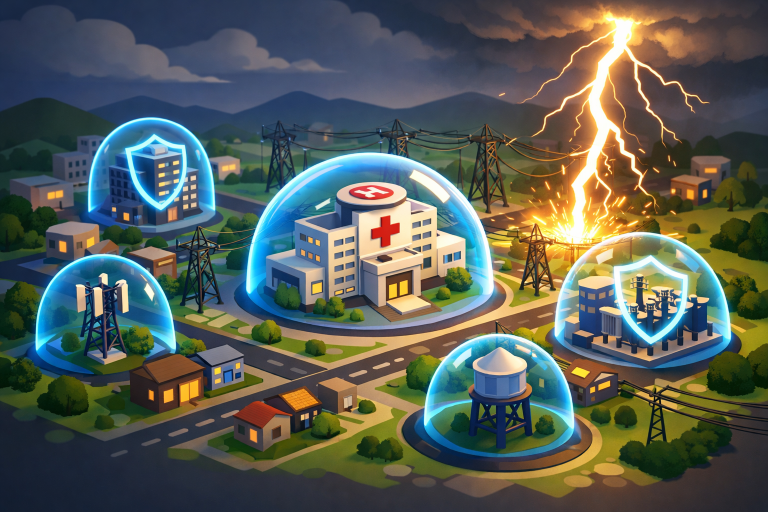
Recent years have brought exciting developments in lightning protection technology. One breakthrough includes drones equipped with special cages that can attract lightning and safely guide it to the ground. This innovation, recently demonstrated by NTT Corporation, signals a potential paradigm shift in how lightning is managed far above buildings and infrastructure. Drones can act as mobile lightning rods, reducing the exposure of valuable assets to electrical surges and physical impact. For more details, refer to NTT’s press release on their lightning drone technology.
Other emerging solutions include advanced air terminals, hybrid grounding systems, and smart sensors that communicate directly with site management systems. These upgrades increase the reliability of protection systems and reduce long-term maintenance costs for property managers and utility companies.
Integrated Lightning and Surge Protection
Modern infrastructures can no longer rely solely on traditional lightning rods. Companies like DEHN now offer systems that combine both lightning protection and surge protection into one cohesive solution. These systems utilize robust grounding networks, surge arrestors, and monitoring technologies to ensure that if a strike does occur, electrical surges are diverted safely and sensitive systems remain operational.
By integrating these solutions during the design and construction phase, businesses improve the safety and uptime of critical infrastructures, which is especially important for hospitals, data centers, and transportation hubs. A single module failure in one of these environments can quickly escalate into a public safety issue or serious economic loss. The US National Weather Service provides helpful guidelines on lightning safety for building owners.
Lightning Prediction and Prevention
Prevention starts with prediction. In British Columbia, Canada, the government is field-testing new detection and forecasting systems intended to help prevent lightning-induced wildfires. These technologies include AI-driven weather modeling, ground-based sensors, and even satellite-based monitoring. By predicting areas with an elevated risk, authorities can prepare mitigation efforts in advance or warn at-risk operations like power companies and emergency responders.
The value of prediction goes beyond wildfire management. It extends to scheduling construction activities, maintenance windows, and protecting field operations during periods of heightened risk. This proactive approach represents a major step for resilience strategies in the age of climate volatility.
Lightning Risk Assessment Tools
Having accurate risk models is essential for long-term infrastructure planning and asset management. Modern lightning risk assessment tools compliant with standards such as IEC 62305-2:2024 can simulate a variety of scenarios and provide reliable risk metrics. These platforms allow enterprises and municipal planners to evaluate the return on investment for different protection strategies and ensure compliance with relevant safety codes.
As risk frameworks become more data-driven and integrated with enterprise systems, decision-makers can prioritize upgrades and schedule maintenance more efficiently. These tools are also invaluable for insurance underwriting, capital planning, and emergency management. Forward-thinking organizations are using such systems to drive lifecycle cost reductions and demonstrate good stewardship of public and private infrastructure.
Conclusion
As infrastructure continues to evolve in complexity and scale, the importance of advanced lightning protection only increases. Through a deeper understanding of lightning risks, the adoption of cutting-edge technologies, the integration of comprehensive protection systems, and the use of advanced risk assessment tools, urban centers and critical industries can confidently address the ongoing threat that lightning poses.
By investing in robust lightning protection strategies today, communities and organizations worldwide ensure more secure, reliable, and resilient infrastructure for the future.


